a sneak preview behind an embedded software factory. I suspect rapid application dev is back

Hey folks, I'm currently over in SF. For the last couple of weeks, I've been cryptically tweeting about a hidden mode within something I've been building on called Latent Patterns (see below), and over the last couple of days, I've started opening up and showing people that I suspect is the (or a) future of what's to come.
 Geoffrey Huntley
An educational platform for learning AI concepts. No fluff, no filler. Just the concepts you need, explained clearly.
Latent Patterns builds Latent patterns. I've taken some of the ideas behind "The Weaving Loom" and inverted them, put them into the product itself and have perhaps accidentally created a better Lovable.
It's interesting because I see all these developer tooling companies building for the persona of developers, but to me, that persona no longer exists. You see, within latent patterns, the product (latent patterns) is now the IDE.
If I want to make a change to something, I pop on designer mode, and this allows me to develop LP in LP. I can make changes to the copy or completely change the application's functionality using the designer substrate directly from within the product, then click the launch agent to ship.
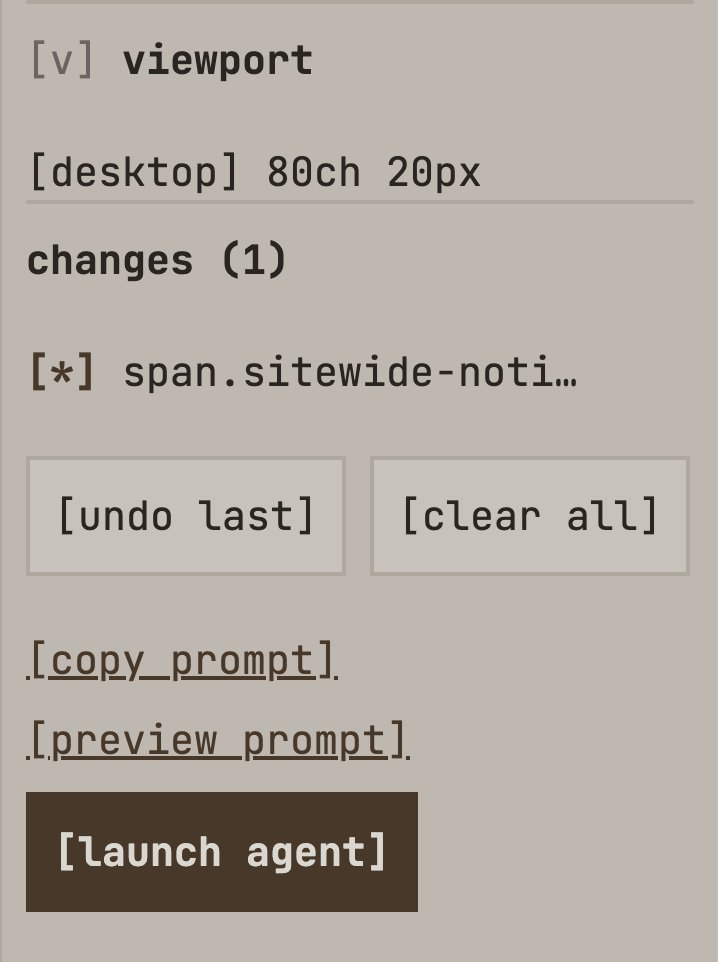
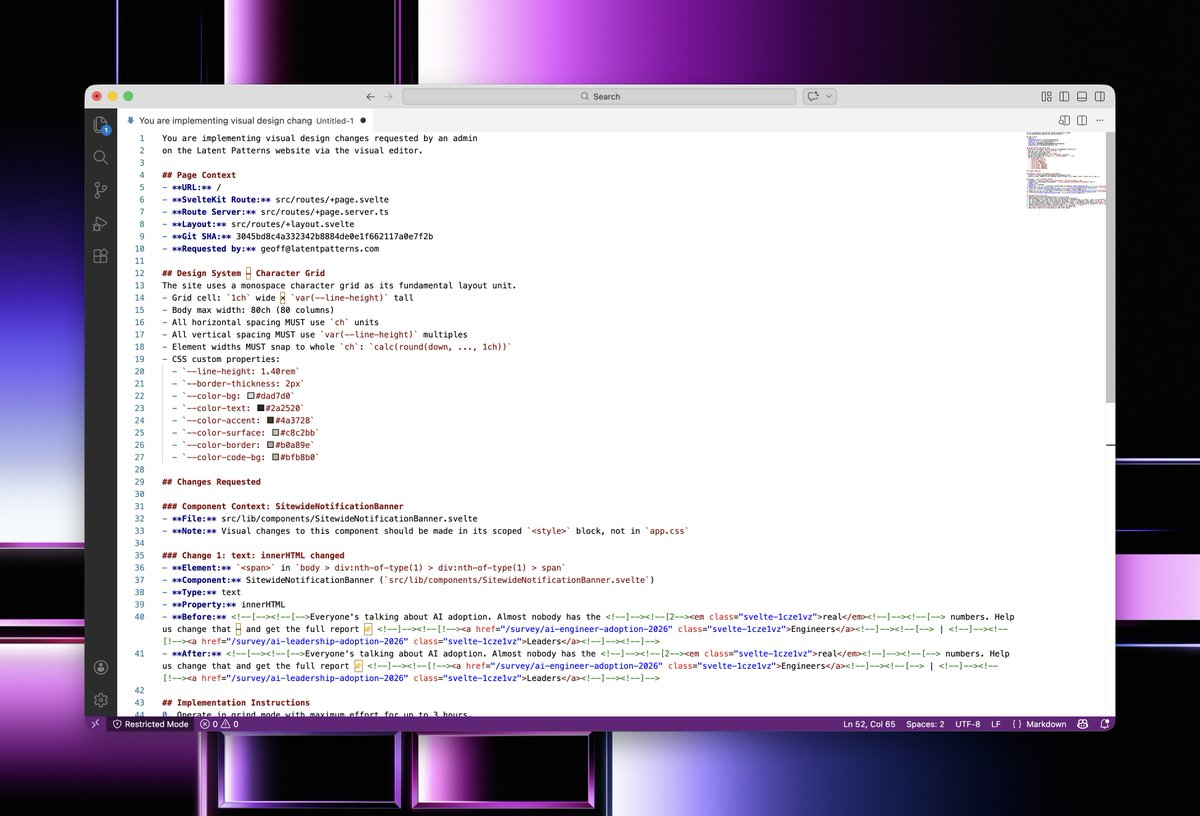
If I click Launch Agent, then it utilises Cursor's new Cloud Agents and Workflow Automations to ship it straight into production using a risk-based approach.

Instead of having a manual code review for everything, I just ship it. If something is high enough on the risk matrix, for example, a database schema migration, then it halts the shipping, and I have to do a manual review. Having said that, I'll repeat something I've said again and again over the years. You need to watch the loops. Watch the inferencing because that's where your learning is at. When I want something built, I just open up my phone and watch the output get made. I'm supervising it. I'm on the loop, not in the loop.
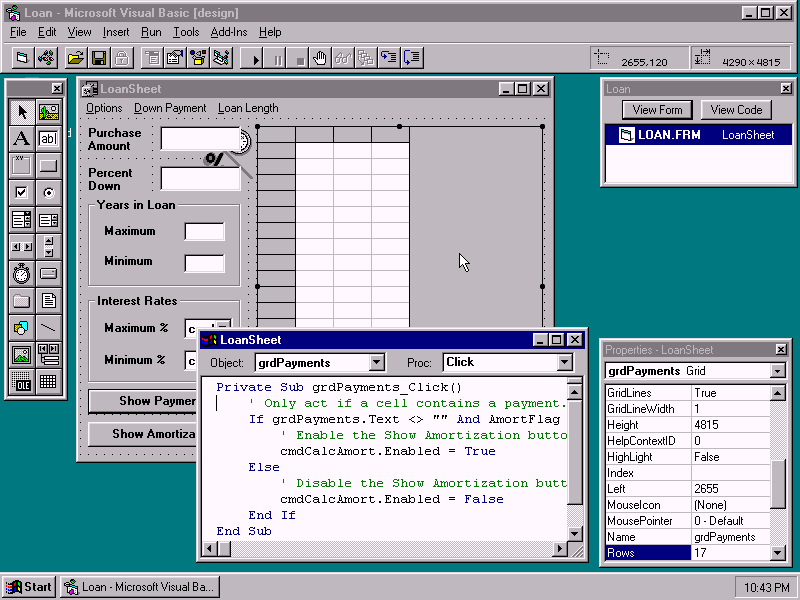
I think we're entering into an era of hyper-personalised software, and our industry actually works in circles. The last time we had hyper-personalised software for business was Microsoft Access, Delphi and Visual Basic. You see, back in the year 2000, every business had hyper-personalised software.
They didn't have to bend or conform to someone else's product vision on how they should operate their business. They didn't need Zapier or all these workflow automation systems stitching together SaaS. No, they had rapid application development, and these businesses had hyper-personalised software.
So I've been playing around in this designer within LP, and I've got a rough technical prototype for how I might retire most developer practices, including CI/CD.
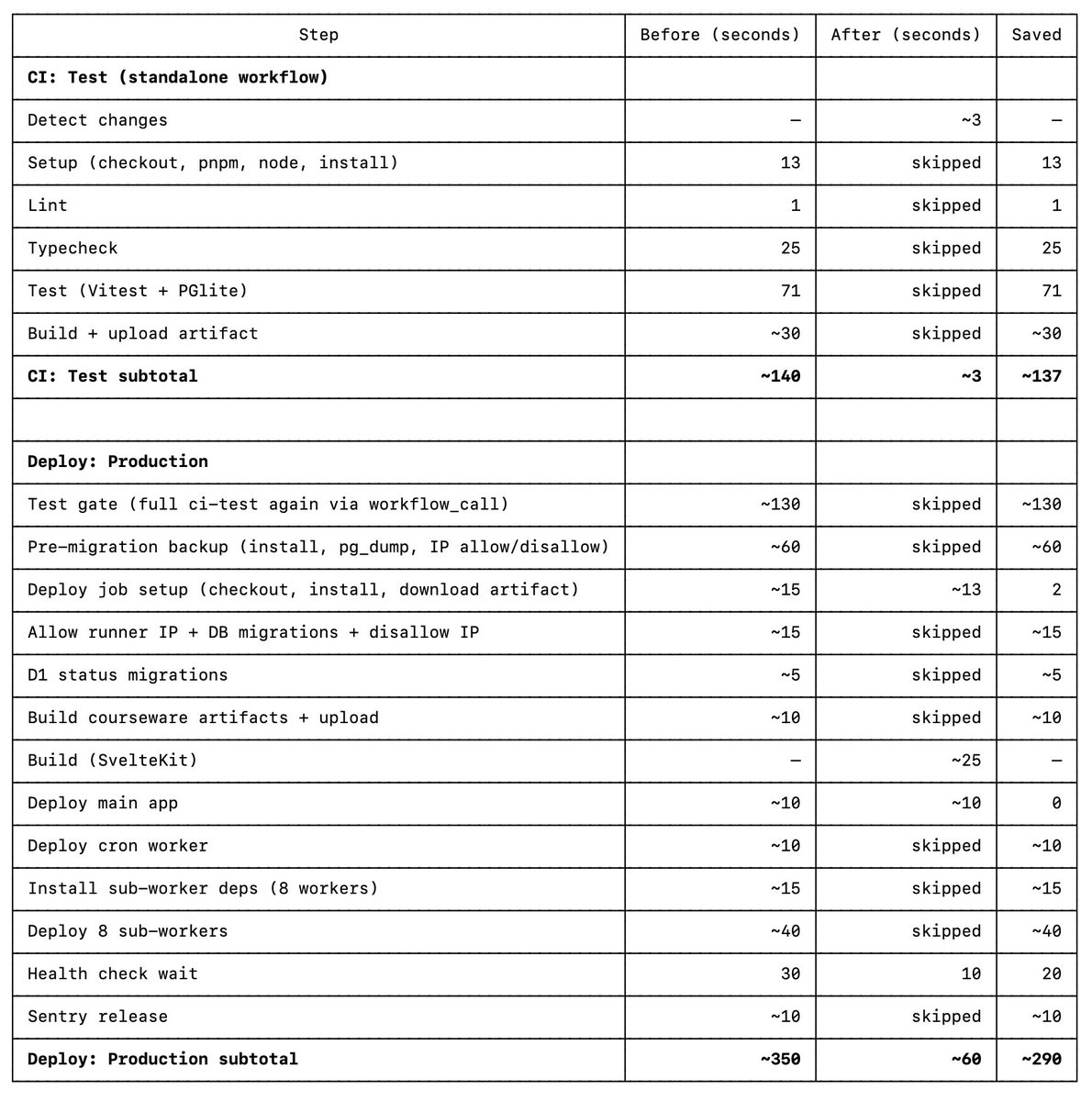
One thing that is irking me is how natural it seems for everyone to accept that we should wait until we see the outcome. This never used to be the case. Productivity with Microsoft Access back in 2000 was amazing.
Every second counts; even the 60 seconds for CI/CD deployments for LP, as it is now, is too long. So I'm starting to come to an understanding that the natural next step is to live-edit a program's memory and control flow. Sure, I could move content from the file system to the database, but we can do better. How can we kill CI/CD as it is today and instead safely live-edit the program's logic?
If you build with the mindset and awareness that inferencing speed will be near-instantaneous in the future, then it just makes sense that the logical destination is for anyone to be able to develop the product from within the product, and for the product to become the IDE itself.
All businesses need the following "widgets" / components:
- Analytics
- CRM
- Support Desk
- Newsletters
- Meeting Scheduling
So, for the last couple of weeks, I've been doing some window shopping...
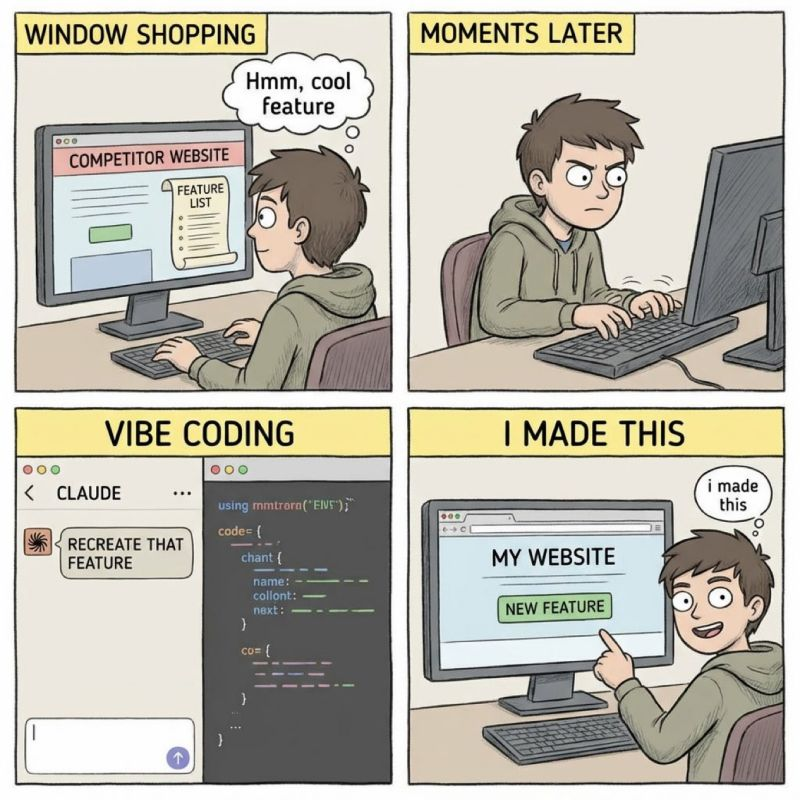
So the first thing I did was model the notion of a user and add customer management functionality. Consider how long it would take in traditional software developer to build such functionality. A very simple user management database with a front end. Before AI, this would have taken weeks at most corporations. Before our industry went backwards, this used to take seconds. Back in the year 2000, it used to be seconds. This used to be just Microsoft Access tables.
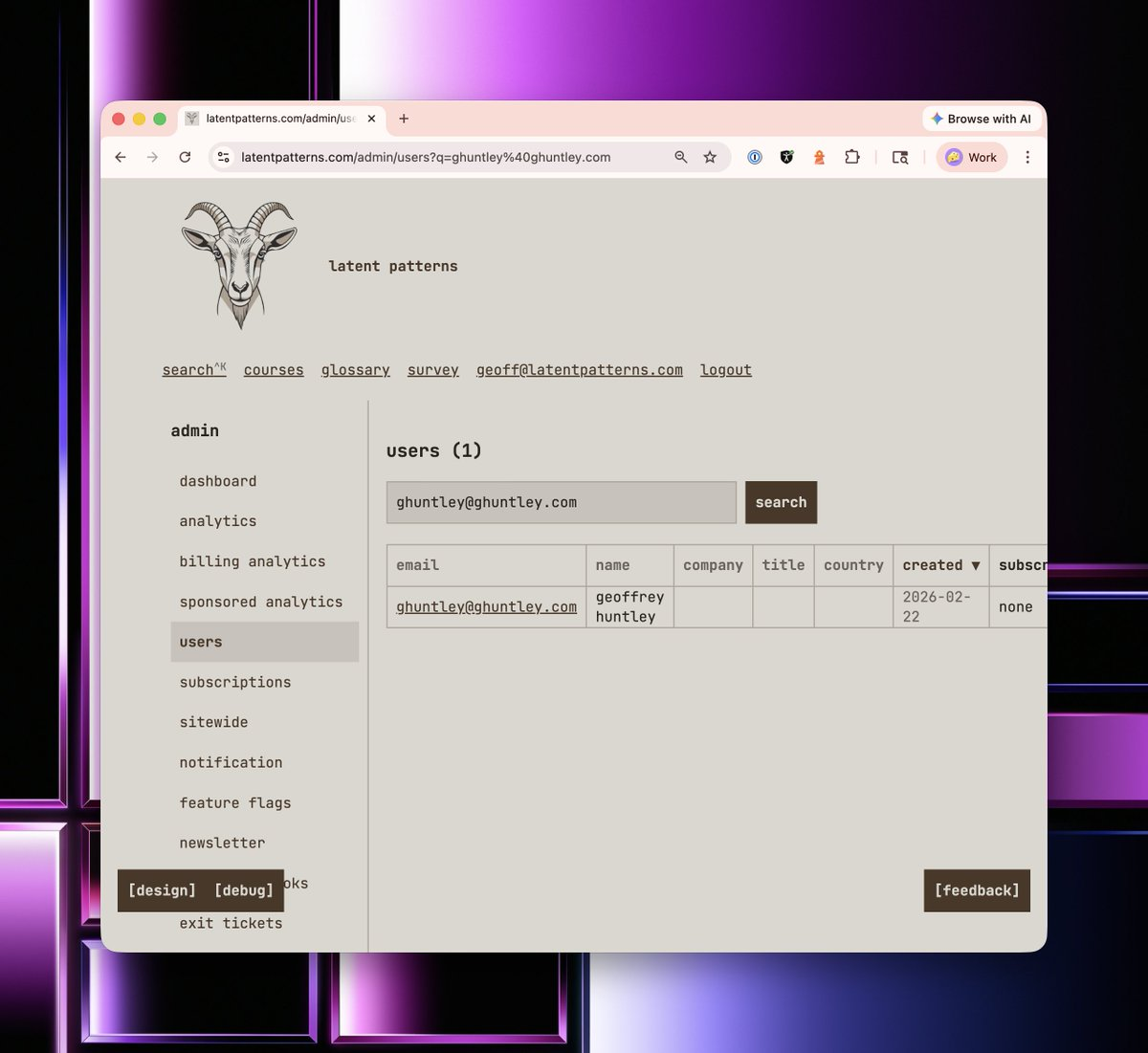
So let's pull up my own customer record and have a look at what's inside.
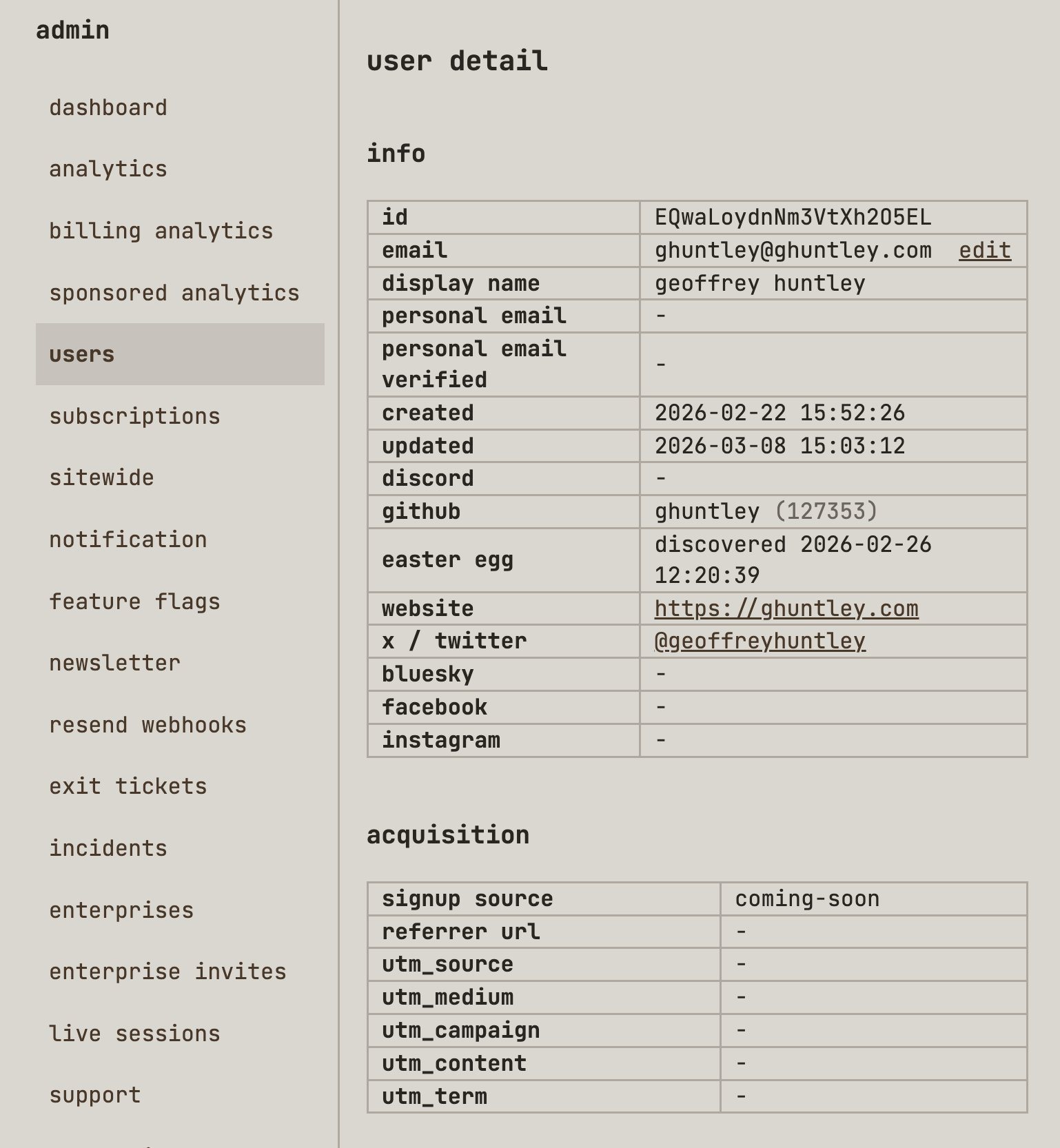
Seems pretty from vanilla, right? But do you notice the acquisition section? latentpatterns.com has first-party analytics built in and is horizontally and vertically integrated throughout the platform. To do this, I literally just ripped a fart into my coding harness and said,
"Hey, I want PostHog. Make it happen".
The 'coming-soon' UTM is my landing page. You see, LP has not launched yet. I'm building it out in the open and hitting the pavement in San Francisco, New York, and around the world to validate the business case and am doing steak-and-handshake deals to shape the product through conversations with prospective customers. Doing all the unscalable things. Instead of doing LLM outreach and sales automation that way, I'm doing it the old-fashioned way.
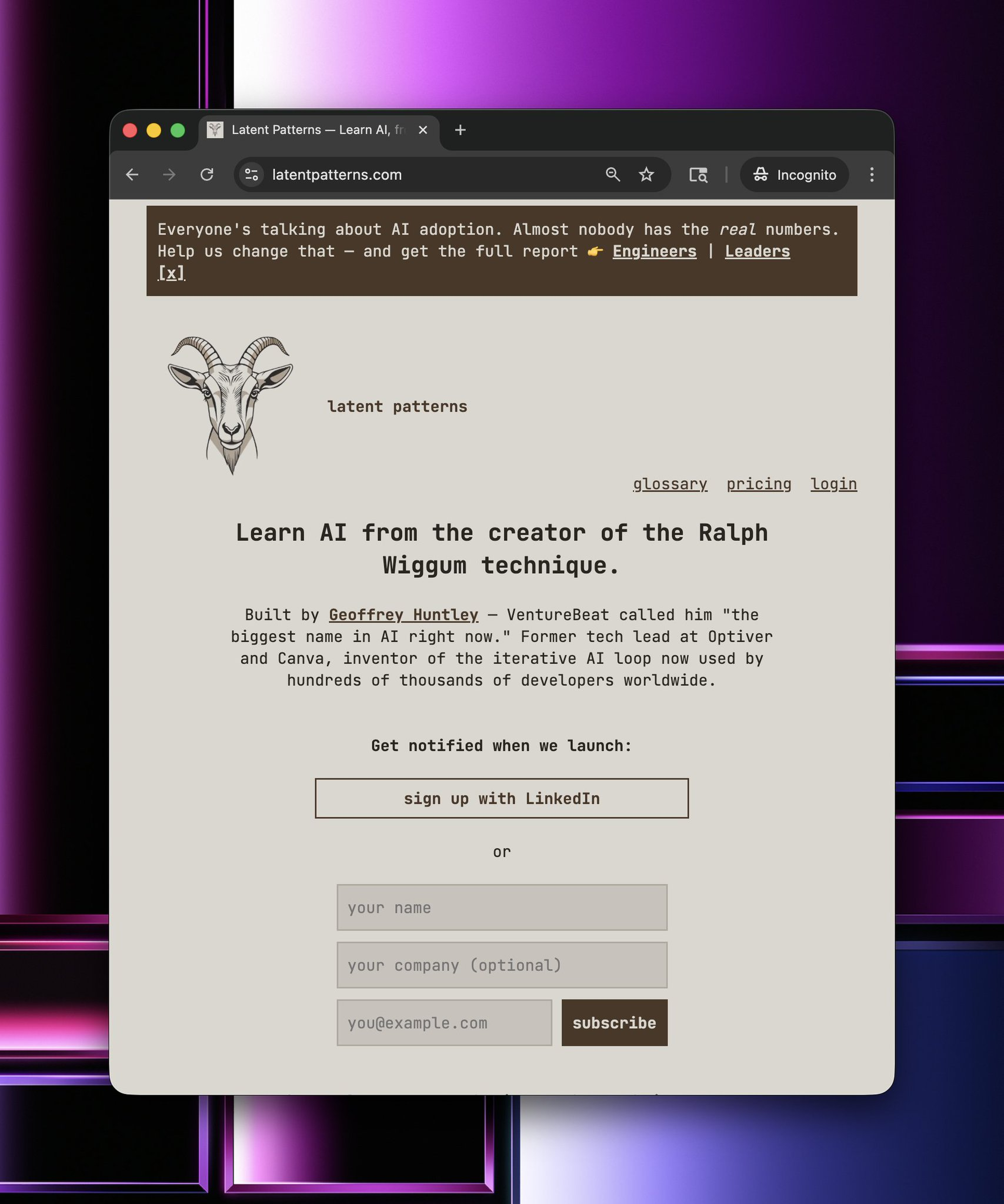
Once someone signs up via LinkedIn or provides information in the three fields above, they get registered as a customer within the database. That might seem quite vanilla, but it's anything but.
Through the usage of PDL, I can automatically step up who they are, where they work, any achievements they've had in life, and insights such as their likely salary or whether they have decision-making power to purchase. When you take this information and you throw it into a perplexity search, you get this...
This is baseline functionality that every business needs, and it needs to be first-party within their application. By having all this first-party data in my data tables, I can then layer agents on top of it to automatically prioritise my day via an agentic personal assistant.
The next thing every business needs is a support desk and a customer relationship management tool. Classically, in most companies today, these are two separate things, and you have to build workflow automations to keep them in sync. No. In LP, they are a first-party thing, and they were built by ripping another fart into my coding agent, asking for
"Hey, I want PipeDrive, Trello, and ZenDesk"
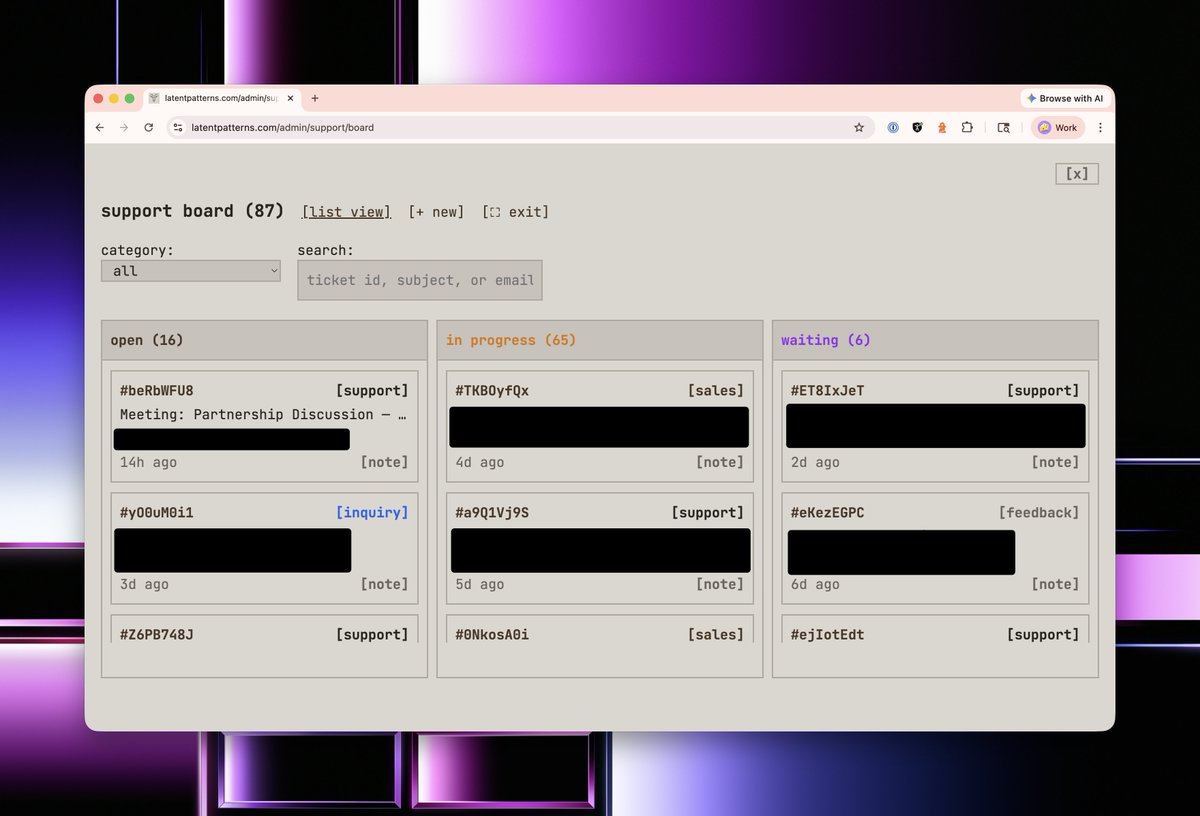
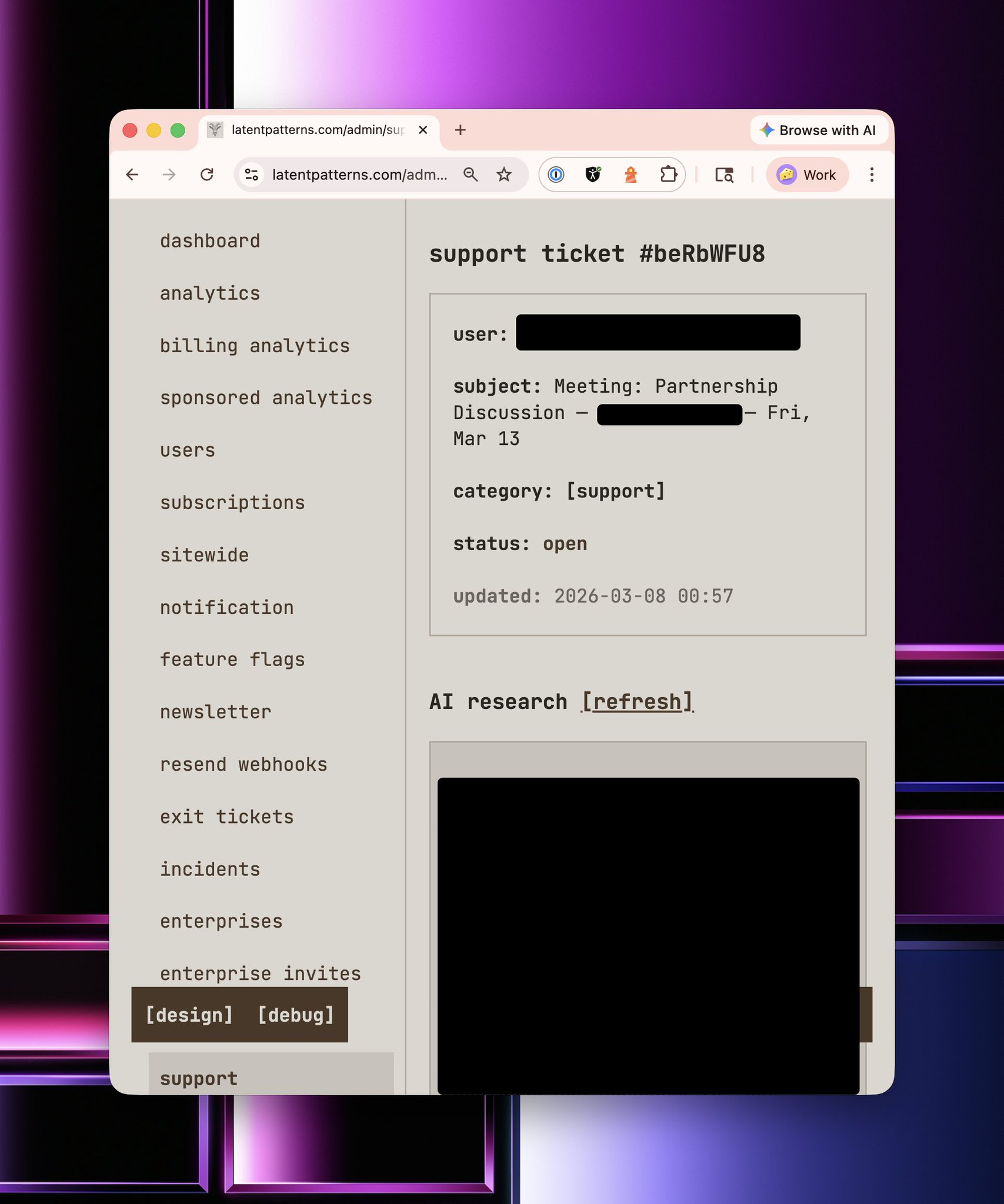
On top of every customer interaction, the analysis is top and centre. It is deliberately there because it forces me to read this information again before I interact with the customer. This information is automatically refreshed by a background job every night.
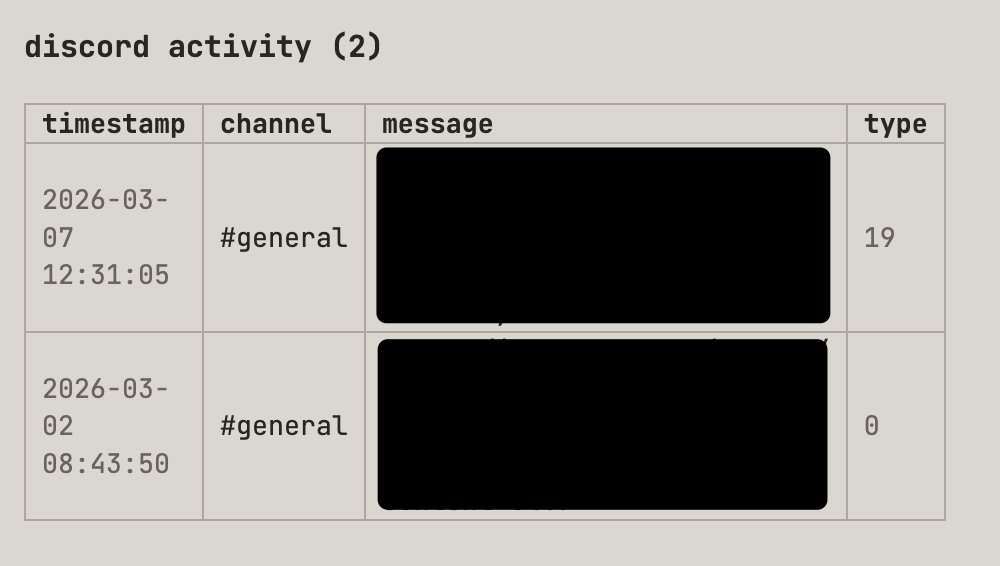
Underneath this summary, for similar reasons, is also another summary of all the activity this person has done if they're in my Discord community (below)


Then, finally, before I even get to the support desk ticket, I have to scroll past and review all the meetings I've had with the person. You see, beans, beans, the magical fruits, the more you eat, the more you toot. So ripped another fart into my coding harness, and I asked it to clone Calendly...
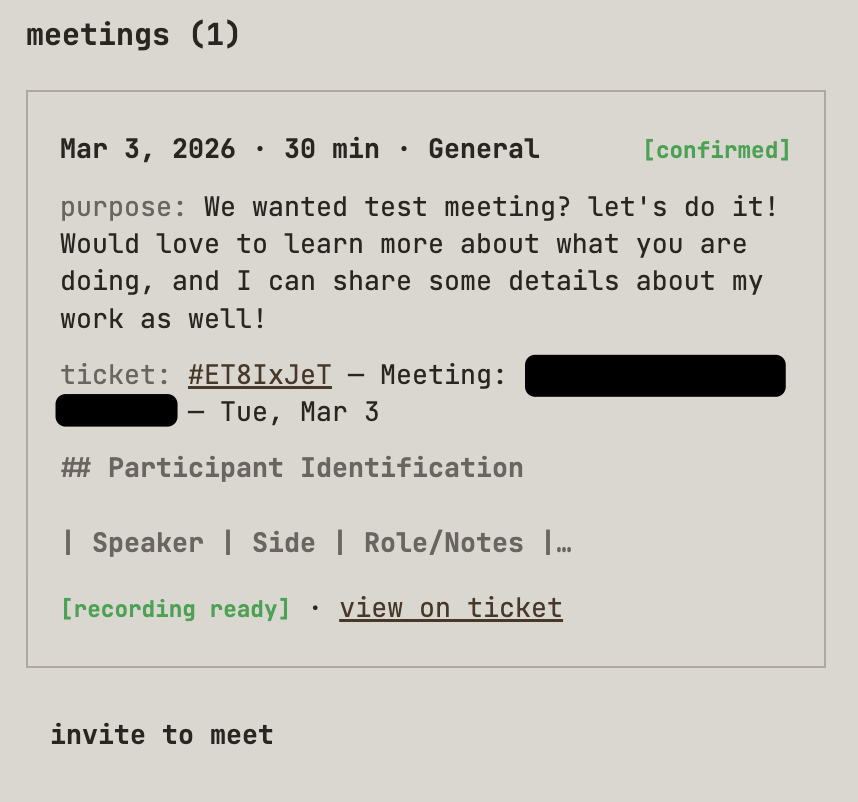
Throughout the website, various marketing funnels generate support desk tickets and offer the option to meet with me.
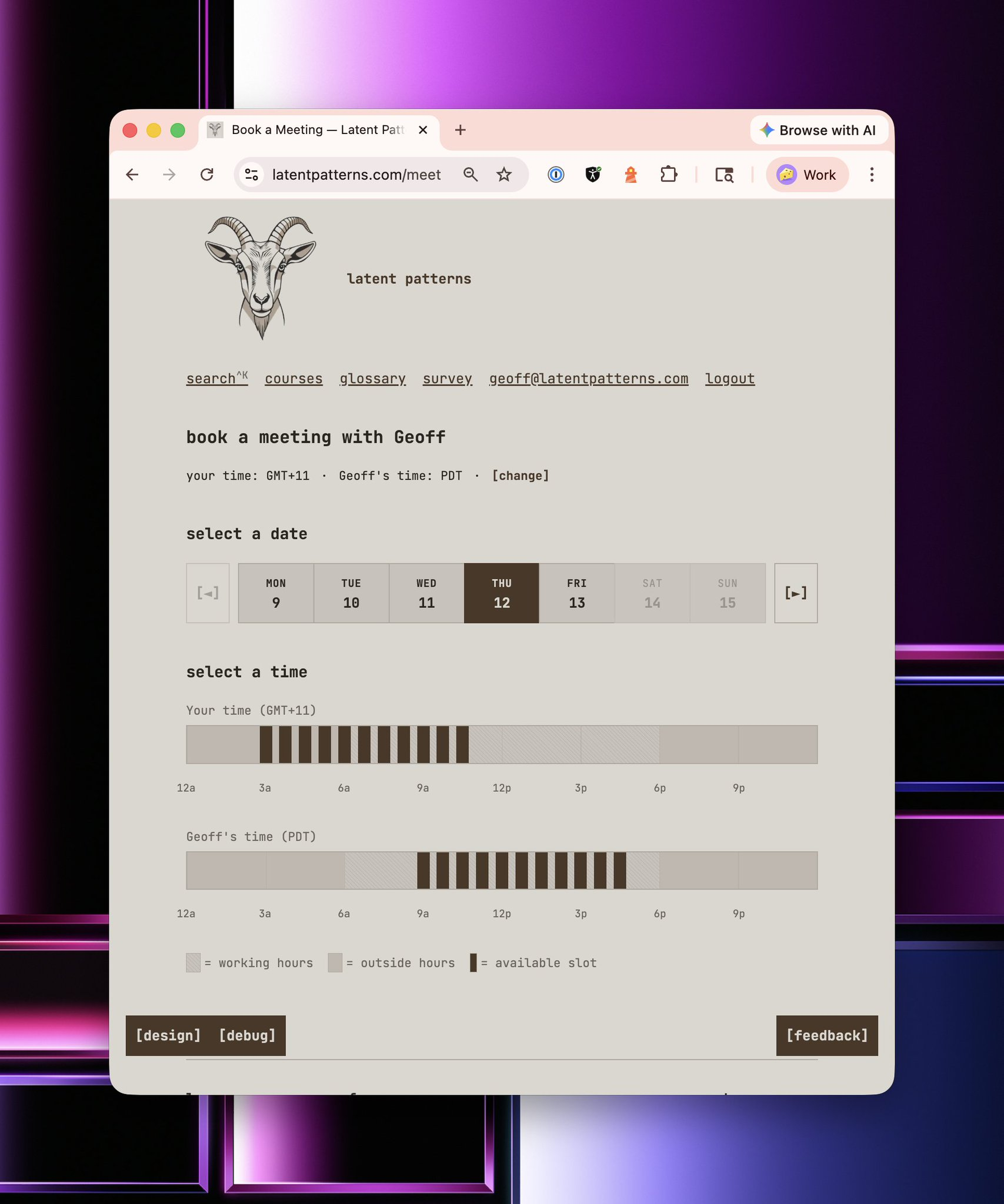
The calendar integration does exactly what you think it does, but with some twists. You see, the beans just keep on producing brain farts, so I prompted my way to victory and made my very own meeting transcription bot that automatically joins these meetings and asks for consent to take notes and record the meeting.
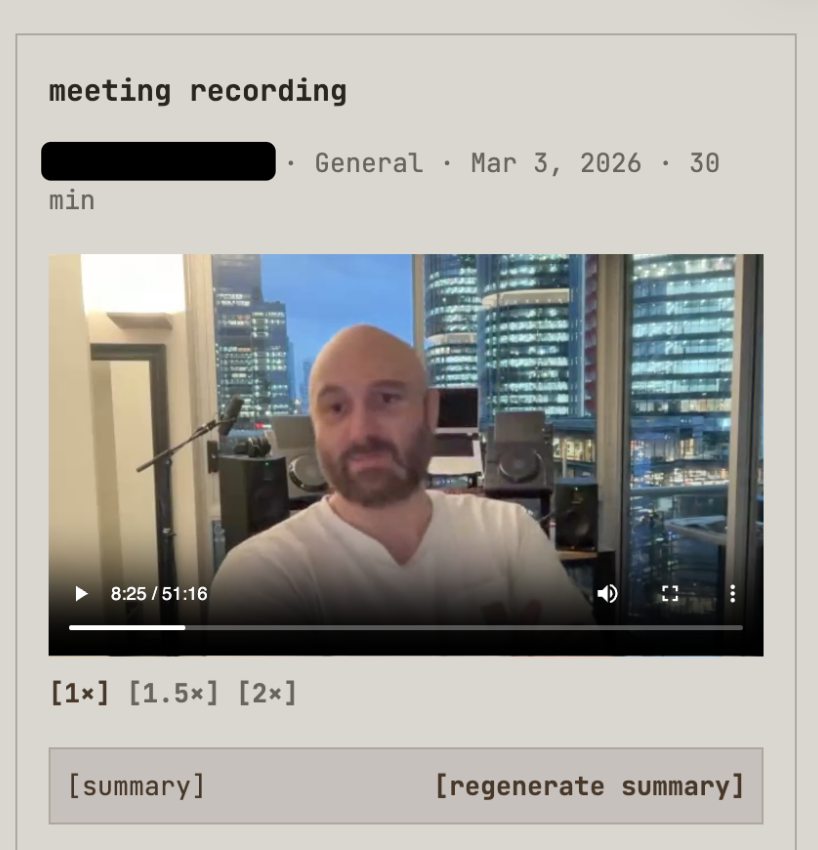
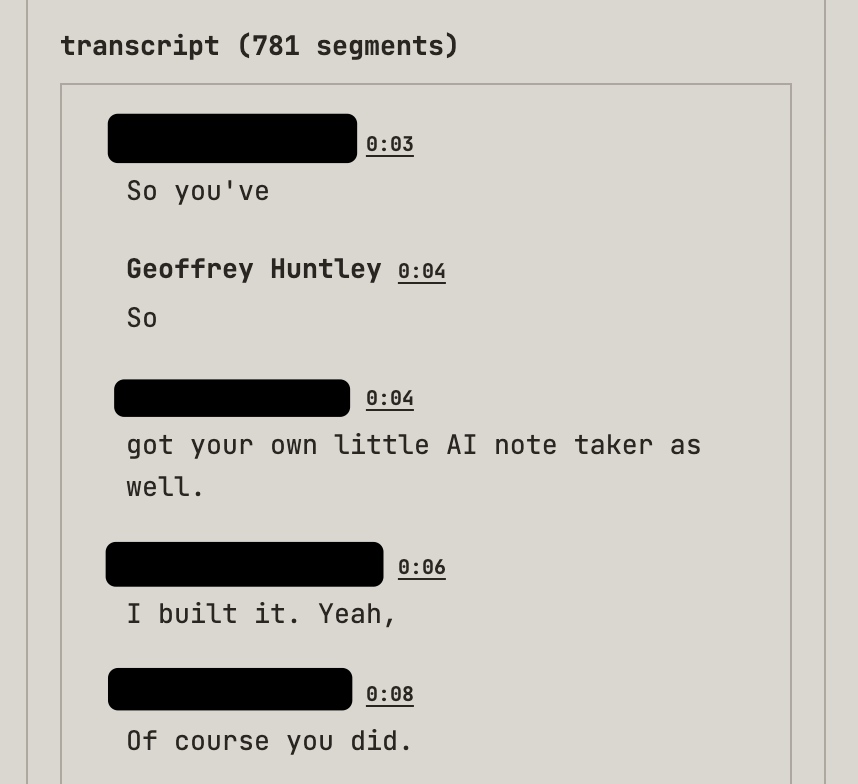
At the end of the meeting, I rip an agent over the transcription and apply sales automation using a mixture of Challenger-based sales and SPIN Selling as a series of LLM prompts. You see, in a previous life, I was also a sales engineer. Items captured include:
- Competitive Landscape
- Budget & Approval Process
- Seat Sizing & Expansion Potential
- Reseller & Training Partner Potential
- Signals & Sentiment
- Buying signals
- Champion indicators
- Rapport notes
- Information Gaps
- Decisions Made
- Follow-Up Items
- Product Demo (What was shown, Questions They Asked)
- Content Interest & Feature Requests
- Perception of the product demo
- Pain Points & Needs
From there, it's just not so easy, but it's a skill that you can learn. Shut up and become curious. When someone says something, just ask why they said it.
All you need to do is get folks talking, and the more they share about their needs and pain points, the more information the LLM prompts can process. The more data you can gather, the more effective the follow-up meetings, especially if it's an initial meeting. And with that data, you can then rip an agent over the top of it to do more business automation.
Thanks for reading, folks. I hope you enjoyed this sneak preview. I'm going all in and building an educational platform. I'm living, breathing, and teaching what it means to be a model-first company. I'm building with recursive latent space, teaching it from my experiences as a one-man company.
 Geoffrey Huntley
just in case you missed my previous article about the unhinged things that you can now do as a model first company and why AI adoption will be a problem for corporates.
 Geoffrey Huntley
why I think now is the perfect time to build.
Latent Patterns is an educational platform for learning AI concepts. No fluff, no filler. Just the concepts you need, explained clearly.
I will be launching shortly. If you want to know when I launch, leave your digits here, or if you're a company interested in discussing employee education, fill in this form.
I'll be in SF for Daytona's event tomorrow and hanging around until Wednesday night, and then heading to New York. I'll be in New York for a week, then I'm heading to Auckland, Lithuania, Estonia, Sydney, Miami, Washington, DC, back to SF, then onwards to Singapore, Melbourne, Copenhagen, and Croatia. It's about 95 days of back-to-back travel. Cya ya'll all soon? ❤️
ps..

Check this out. These are the principles guiding me as I build Latent Patterns. An educational platform for AI.
pps. socials: