to Kodak yourself out of business

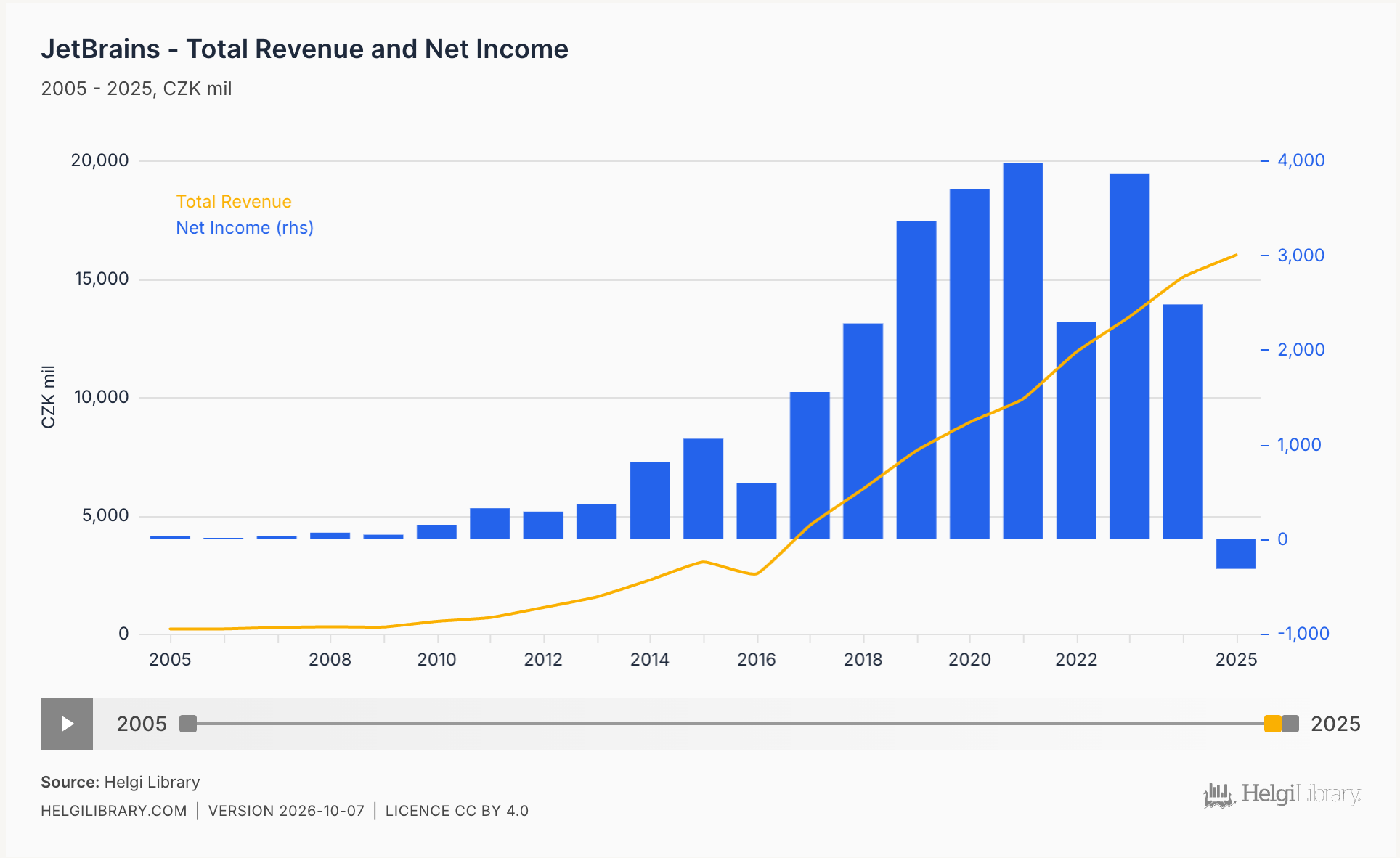
I don't know if you've noticed yet, but JetBrains reported a net loss for the first time in its recorded history.
Before we go into this, let's rewind time to January 2025, nearly a year and a half ago, when I penned these words.
So, I've been wondering what the next generation of IDE looks like in this post-LLM world. Why do I need to have multiple IDEs open? What if we ripped out the "collaborate with humans" functionality from Zed and inverted it so it's "collaborate with LLMs," and an unbounded number of LLMs could be connected to the IDE. Even then, that might not be radical enough of a UX/design overhaul. Maybe we don't even need an IDE? Maybe Devin is onto something...
I remember writing these words as a tech lead at Canva, with coworkers calling me mad and saying, "Geoff, what do you mean?" I love JetBrains. I love my IDE. There's no way in heck this is changing; JetBrains will figure it out."
I'm not salty about it; it's just a fact. You get used to these things when you're early. If you're curious, you get used to the friction from people who aren't used to early, informed insights. To me, it was plain and clear that IDEs were dead and we needed better tools.
 Geoffrey Huntley
When I wrote the above, I was in the background enumerating JetBrains at all levels through our customer channels about what their roadmap would be, how they would counter this risk in business, and it's ultimately really sad to see that nothing was done other than jack the price of their subscriptions whilst simultaneously delivering a low-quality product (ala "private equity/broadcom subscription revenue extraction phase")
They essentially Kodaked themselves.
JetBrains could only see the world through the lens of the IDE, and they hoped that AST exposed by a language server would be a source of alpha even though everyone else in the agentic coding market was getting ripping results without symbolic context injection. Their experience and domain expertise became their curse, keeping them from changing and adapting to the market.
And that is the deepest lesson. From this point forward, I'm not going to mention JetBrains, but I'm going to focus on the lesson. Every company is blinded by its domain expertise and how it makes revenue, and in times like this with AI, it's important to stay highly neuroplastic and check your blind spots.
A good example of this is the labs. The labs deeply believe that a future version of their model will solve software verification because tokens shape their worldview and perspective. This belief blinds them to the fact that a better model will not solve the problem of verifying that an application will behave correctly in production under suboptimal conditions (i.e., flaky network connections)
My strongest advice to all business leaders right now is to look at your own dogma, how you view the world, and make sure you don't Kodak yourself in this super weird moment of hyper transformation.
ps. socials
🗞️ https://t.co/dgoRPZykGC
— geoff (@GeoffreyHuntley) October 7, 2026
> I remember writing these words when I was a tech lead at Canva, and coworkers were calling me mad, going, "Geoff, what do you mean?" I love JetBrains. I love my IDE. There's no way in heck this is changing; JetBrains will figure it out." pic.twitter.com/ZeU2m17hhq