the eighteen-month recap: AI Engineer, Singapore, May 2026
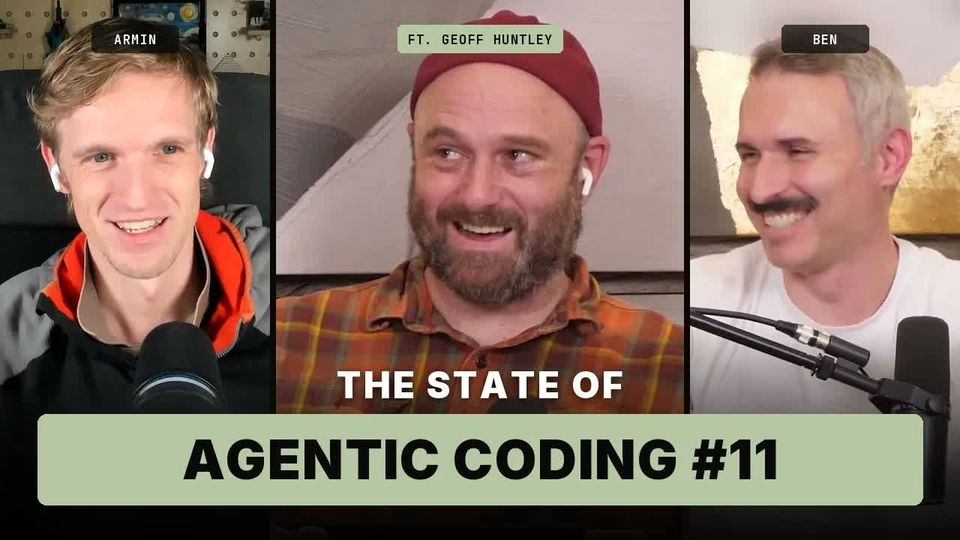
This is the eighteen-month recap: the talk I gave on day two of AI Engineer Singapore. A lot has happened since the six-month recap in Melbourne. The recording is below, followed by an edited transcript with the slides.
Welcome back. For those who were at the party here last night, he actually came on for a couple of sets and DJed as well. So who is Geoffrey Huntley?
He's an independent AI researcher known for doing unhinged things with AI. He's the person behind the Ralph loop, which is now incorporated in many, many tools that are used today.

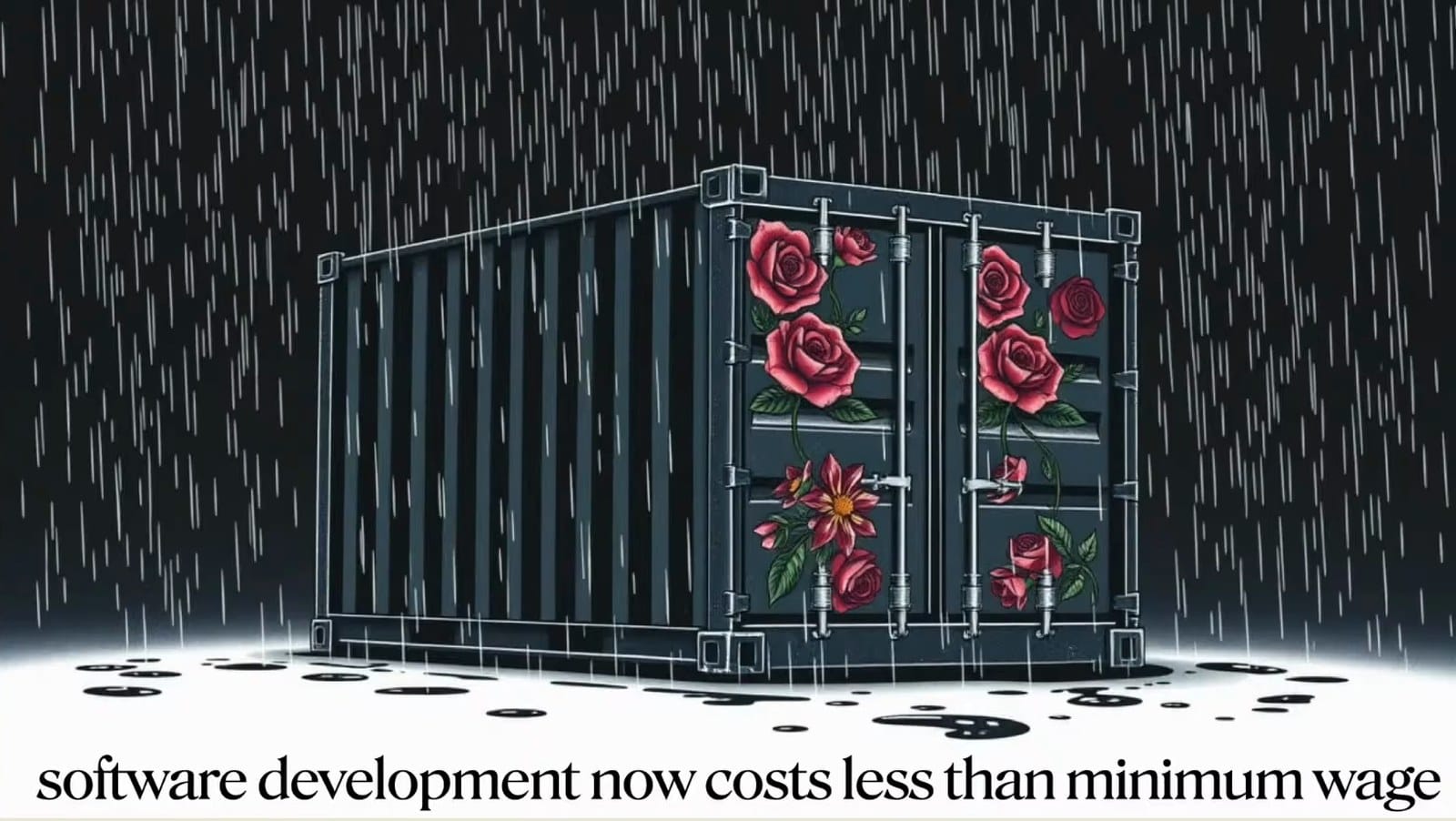
Hello everyone. As confident as I might seem about these topics, I must say this is quite a provocative title. I don't know. So when you're listening to this, I want you to reflect upon it. Maybe I'm right, maybe I'm wrong.
It's a provocative title because I'm saying that software development now costs less than minimum wage. There was a time when, if you wanted to do photography, you had to buy specialized tools. But now everyone's got an iPhone, and everyone's a photographer. Think about that. Things have changed.
With that disclaimer out of the way: I do not work for anyone. I am completely independent. I do not represent anyone. So this is going to get spicy. Let's do it animal style.
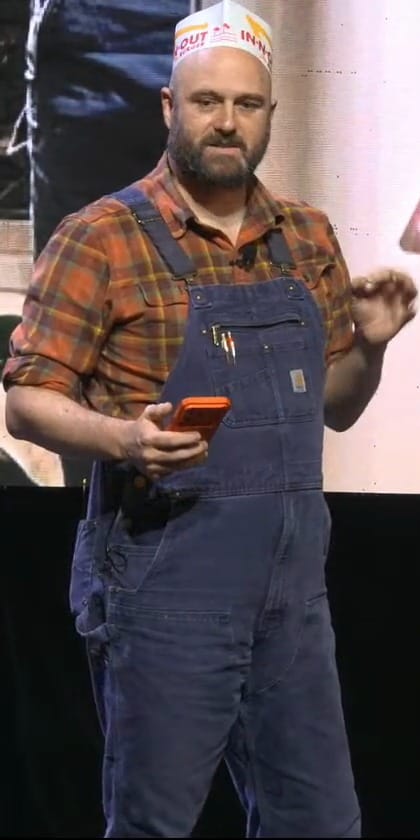

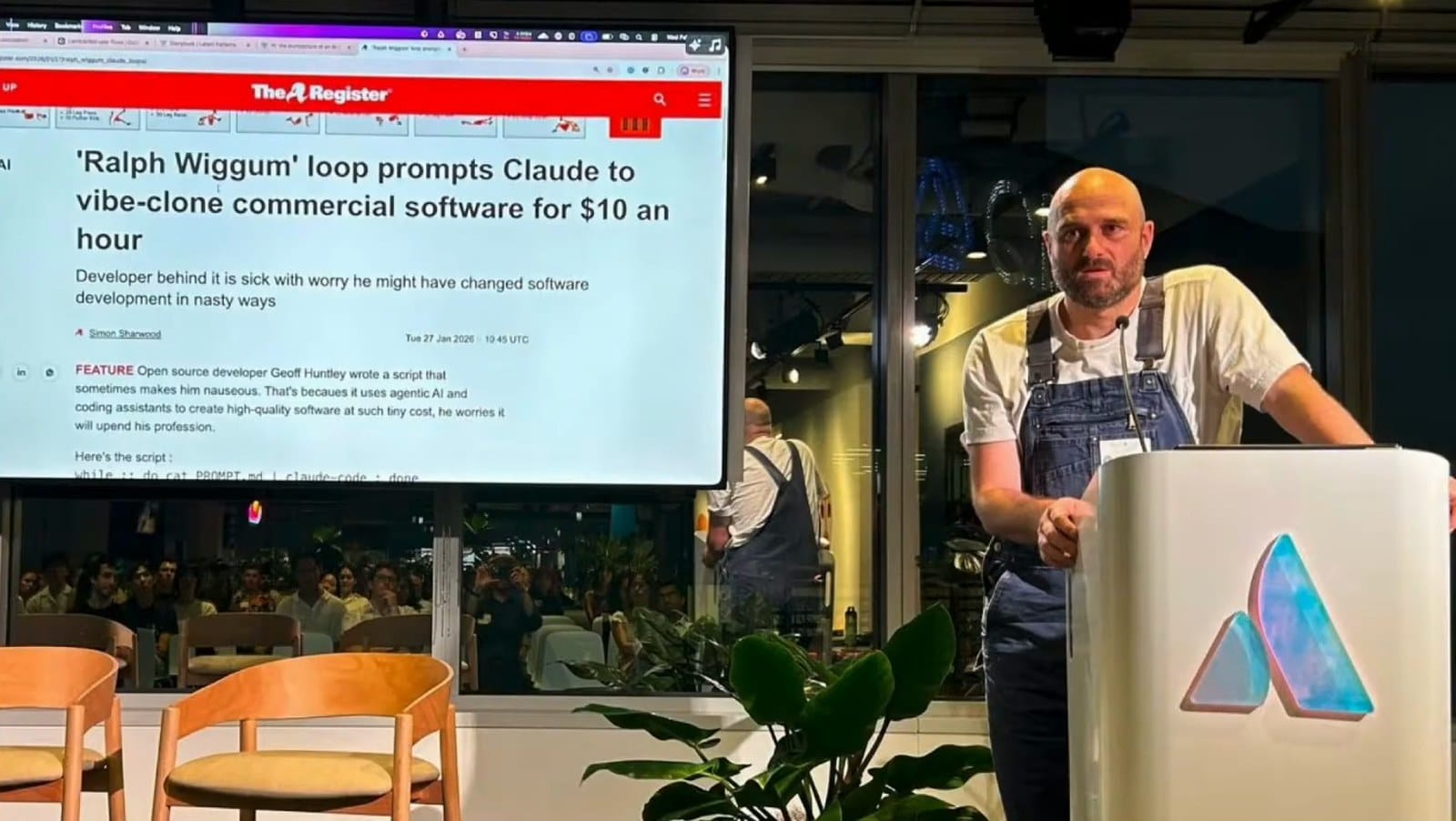
It's been roughly a year and a half since I published the technique of allocating memory in a particular way. If you wrap the tool calls around another loop, it's just a loop. But there's a lot of science in the context engineering needed to actually achieve these outcomes, and it's quite disruptive. Here I was giving this talk about how everything has changed, and this was a week before Atlassian did their layoffs.
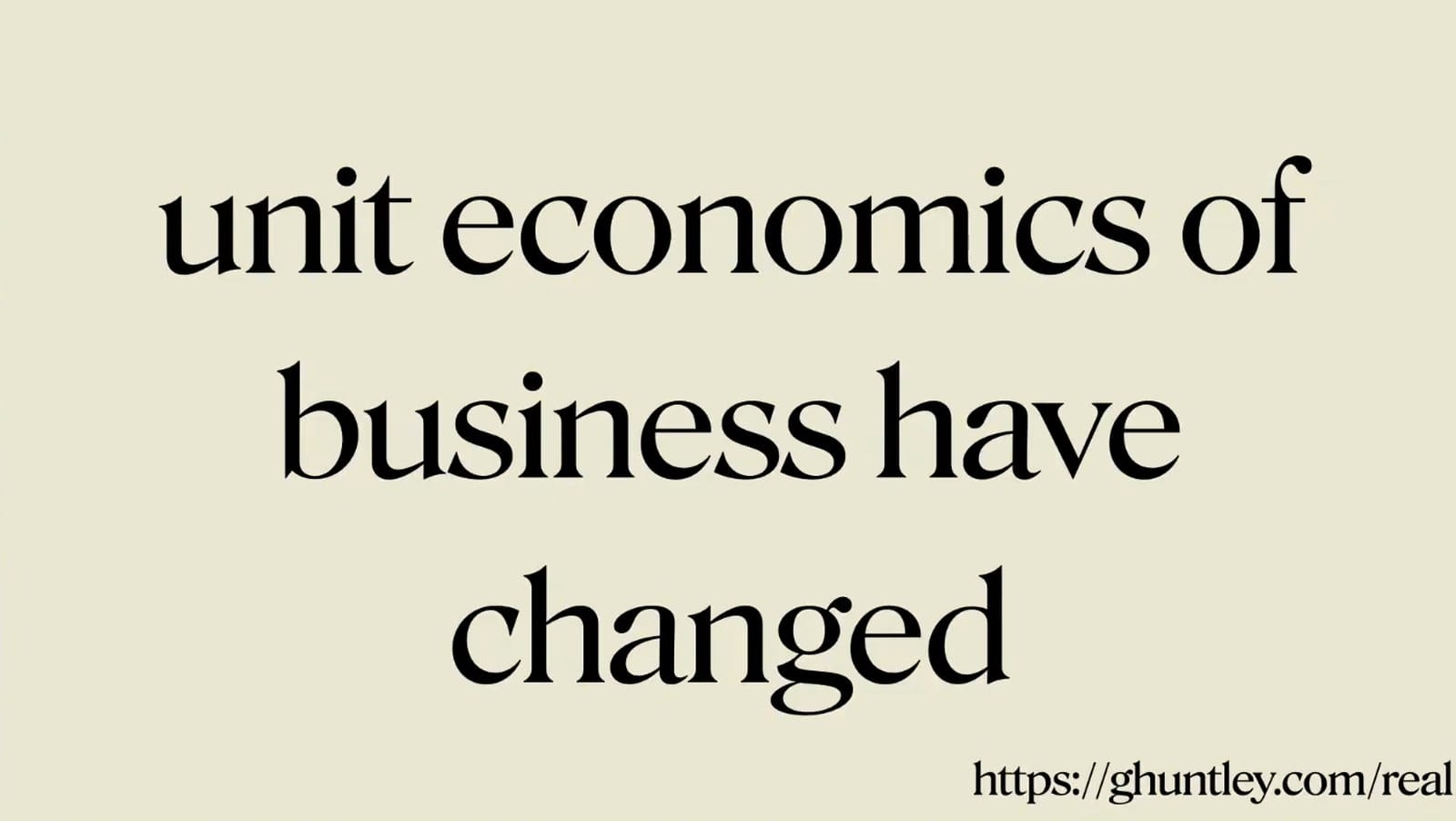
Oops. You see, the unit economics of business have forever changed. I want you to really understand how big this is. If you do not believe this is true, you need to stop speaking with other developers. You need to speak with founders. You need to speak with business leaders. You need to get a little more curious about what this means and get ahead of what this means for business.
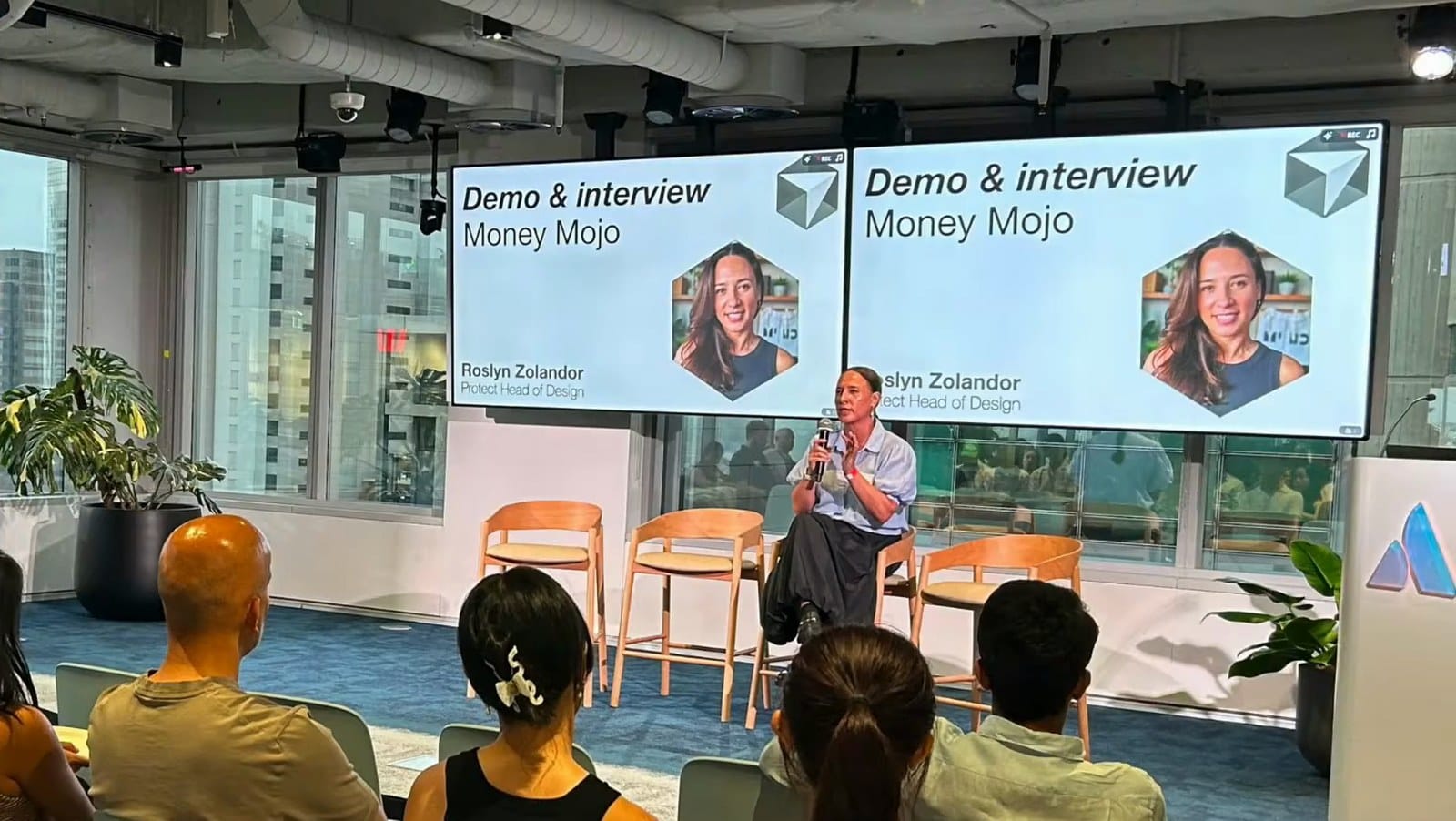
What does it mean when everyone is a software developer? For no particular reason at all, Cursor was at the same meetup. This isn't a plug for Cursor, but I want to call something out at this meetup. Here's Roslyn, and there were other people like Roslyn. They're designers. They're product managers. And they're having the time of their damn lives. There weren't any software engineers up there giving talks.
That's because they're now being enabled to become software developers. For the first time ever, it's like an iPhone in their hands. They can just get stuff done. They can take photos. They can develop software. Whatever is in their wildest dreams, they can do.

I've been traveling around the world for the last three months. I think I've given this talk 17 times now in different cities, including Auckland. In Auckland, I decided to go on a side quest to Hobbiton from The Lord of the Rings.
My tour guide asked, "Geoff, what do you do?" and I'm like, "I do AI. Please don't judge me." Next thing you know, his eyes lit up, and he goes, "Geoff, how good is AI? How good is AI?"
What does it mean when your tour guide is tolken-maxing?
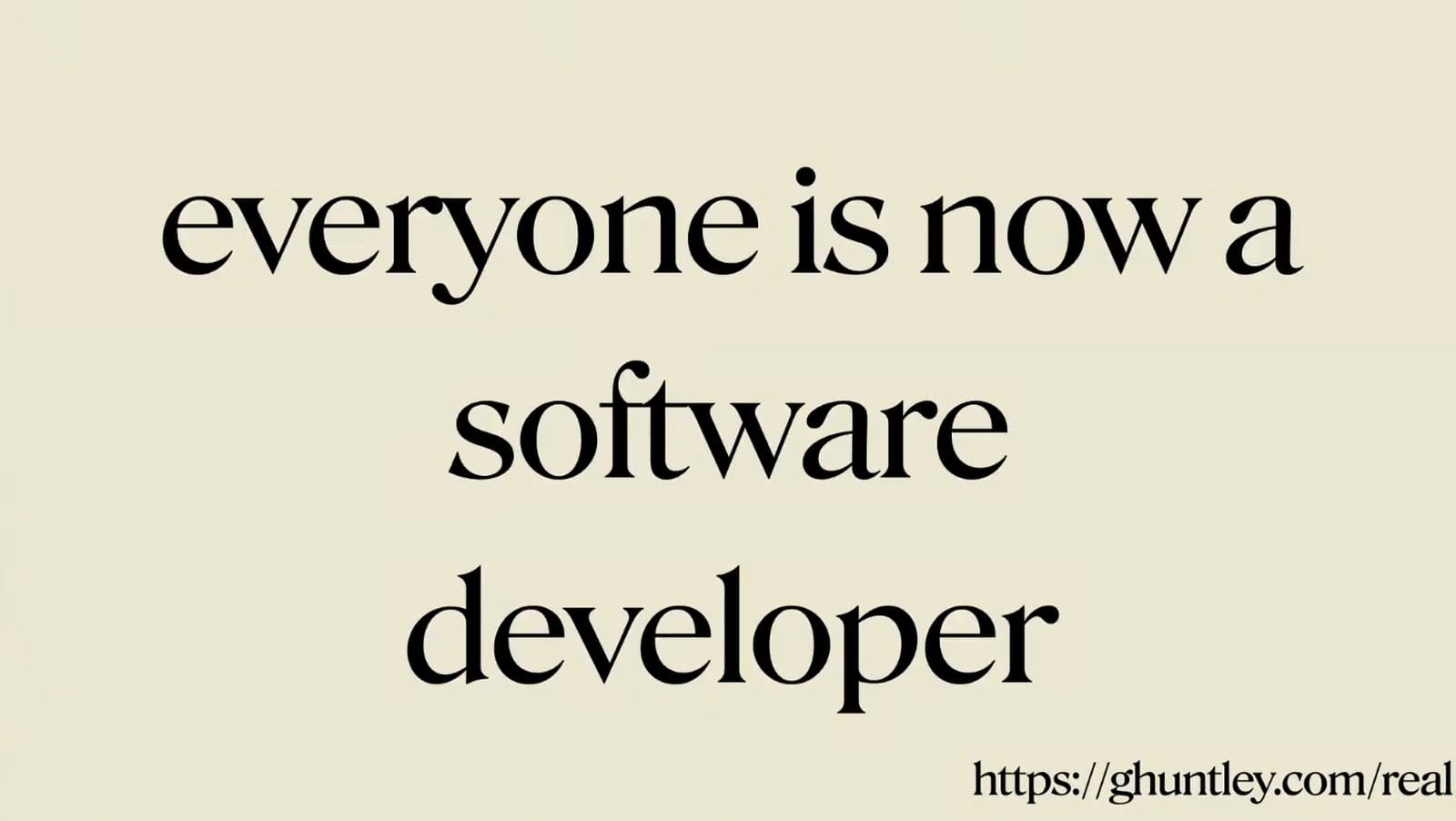
Everyone is now a software developer because AI has enabled everyone to be one.
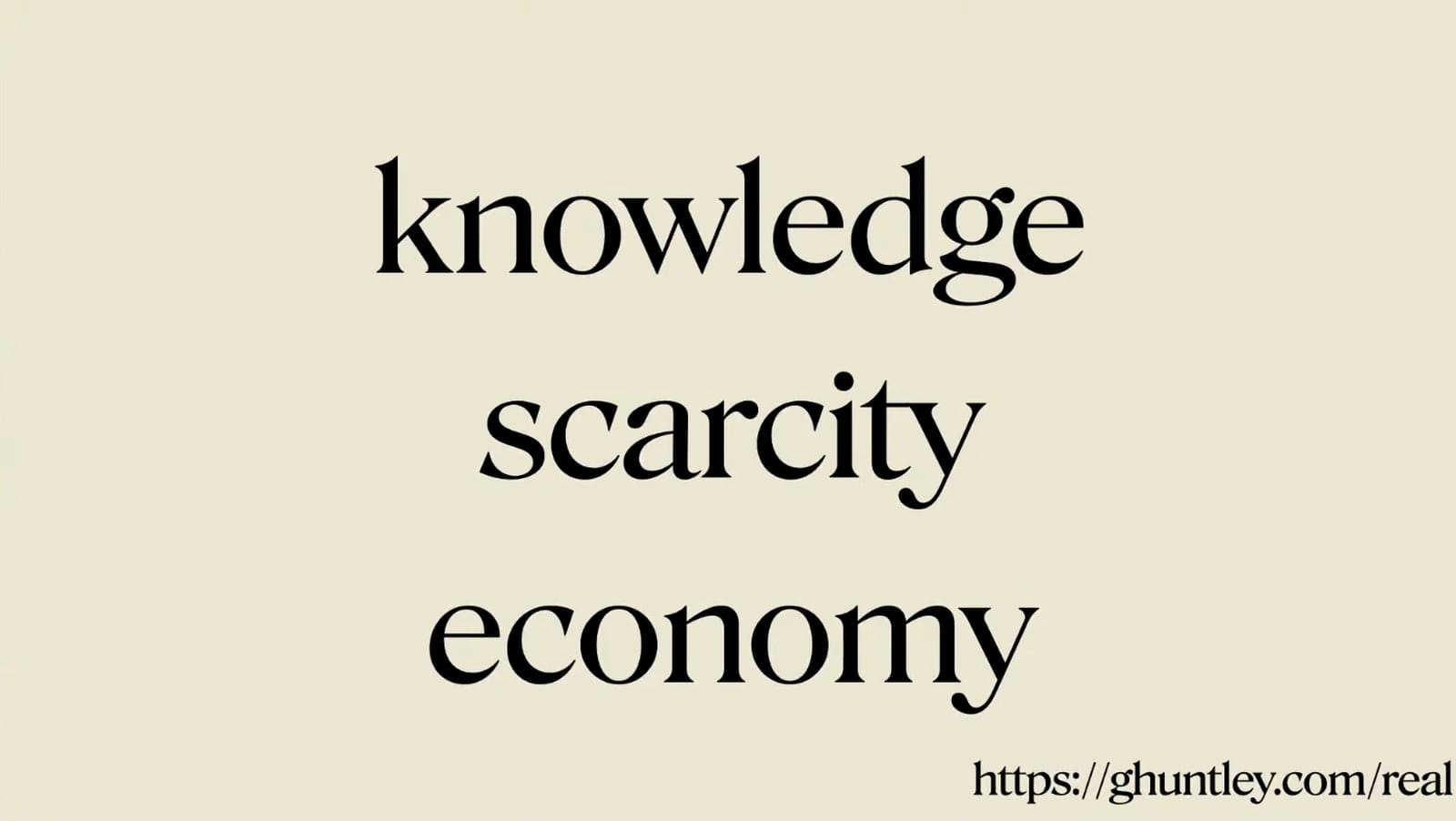
Society has been designed around a scarcity of knowledge. We used to charge a lot of money because knowledge was scarce. This is how we structured our societies. This has changed, folks,
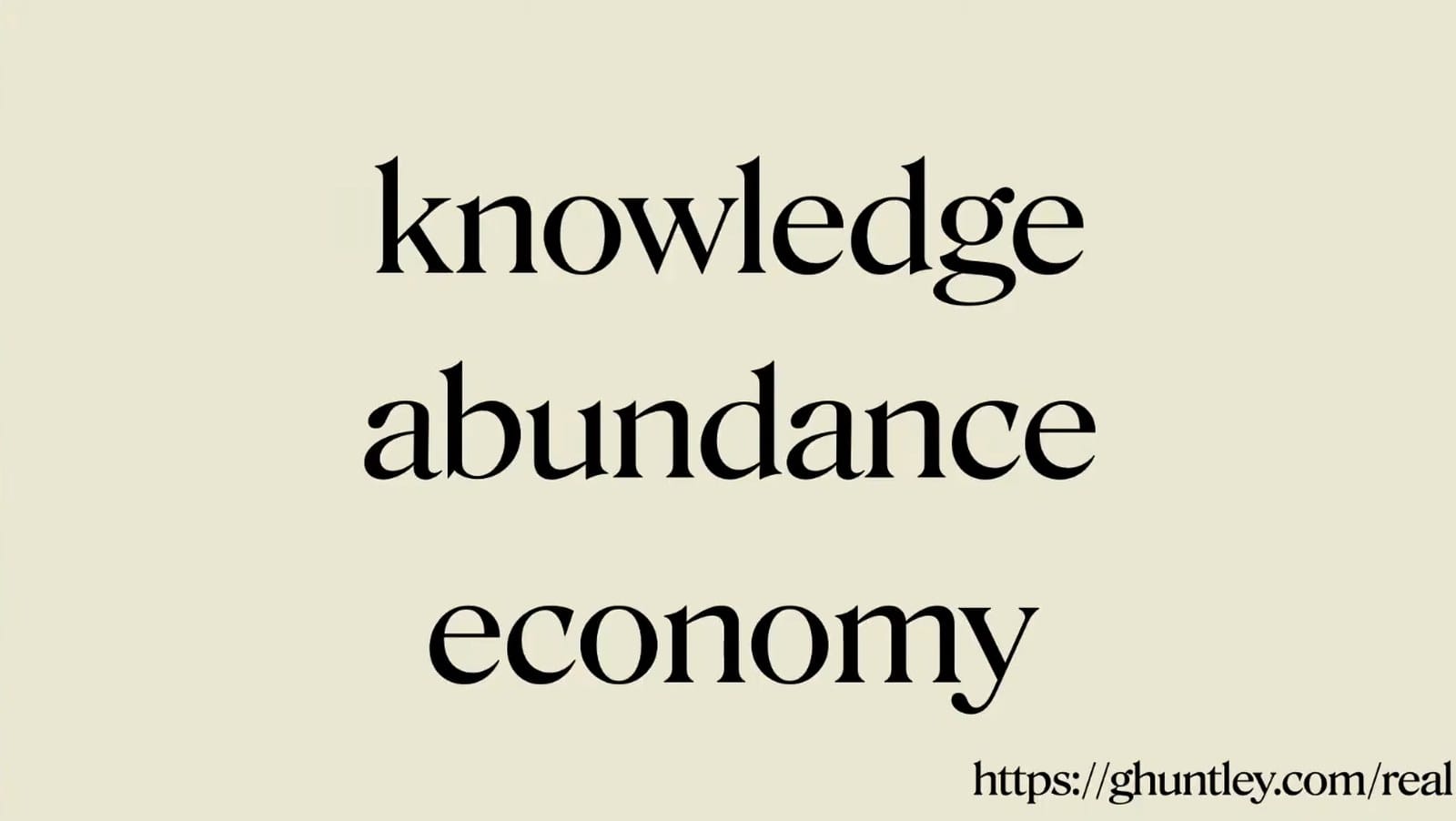
because we're now moving to a knowledge abundance economy. If you want to be a principal software engineer, you probably know things about deterministic simulation testing, property-based testing, test generators, formal methods, proofs, and all these advanced things. What does it mean when all of that is just wrapped up into a skill file?
And it's not just about software engineering. It's about accounting. It's about law. It's about all of white-collar work, which was essentially built around the idea of a scarcity of knowledge. This is a transformative effect on society.

If you rewind time to about two years ago, this is me in November 2024. I first said, "Oh, fuck." I published a blog post saying everything's got to change. I was saying the IDE was dead, and people were calling me crazy for it. But not many people here, at least in this room in Singapore, are using the IDE day-to-day. You're using some form of headless or async agents. You're probably cooking something on your phone right now.
The models back then were already good enough to cause societal disruption, but it required a lot of skill to get outcomes from them. A lot of skill. They were like wild horses, wild stallions. You had to tame them before they got good.
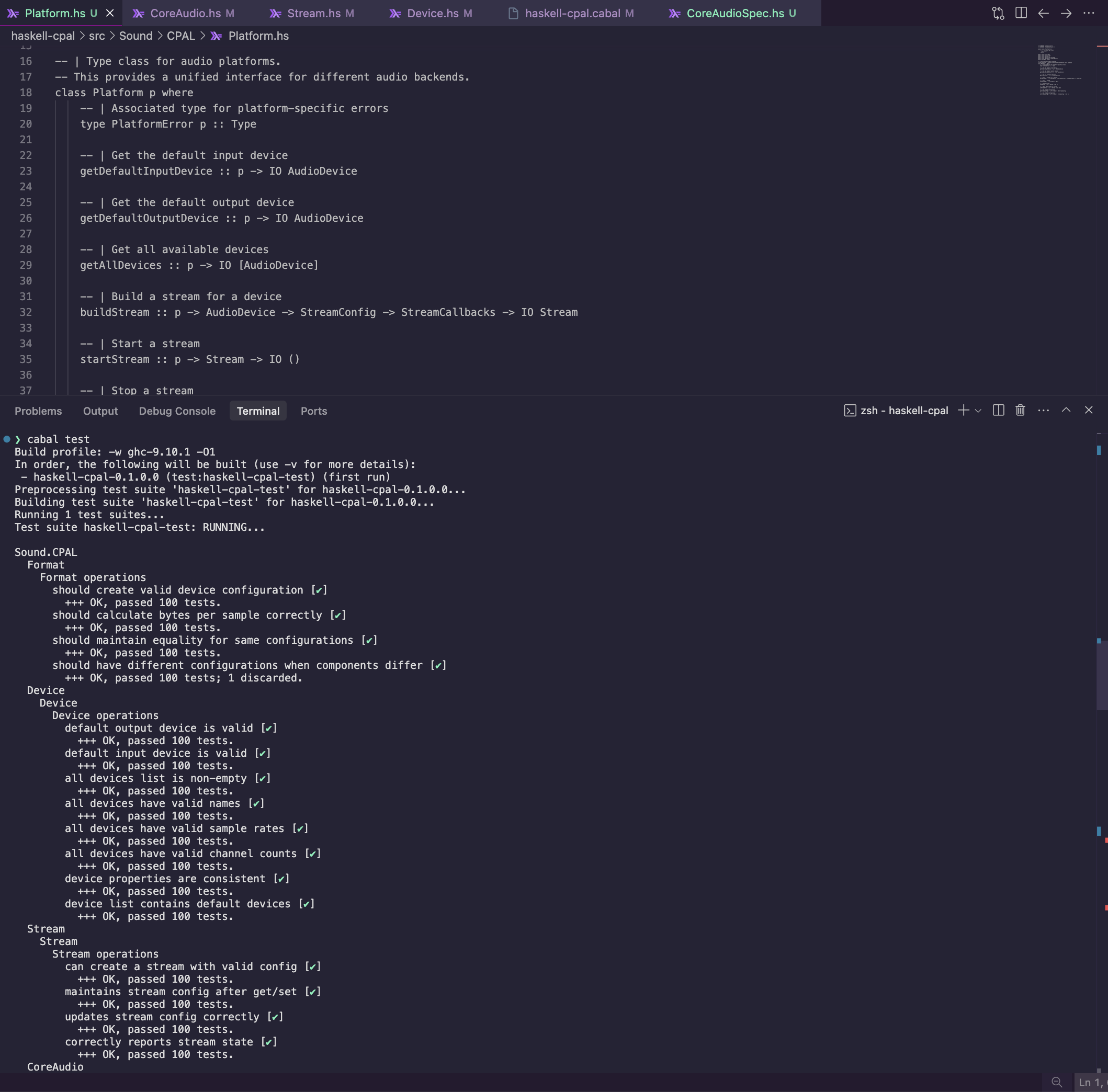

And you probably recognize this moment in time. This is when the models actually got good and required no skill to tame, as a harness engineer, to get good outcomes.
There's something interesting here. No matter how good AI gets, adoption moves in lockstep with the time it takes society to understand that things have gotten better. It doesn't matter if the models keep getting better and better and better. The reason there was an "oh crap" moment in December was that people had time off. They had slack. They had play. They had the ability to play with this stuff and understand that it had actually gotten better.
So my hypothesis is that you're going to see the system shocks in society move in lockstep with downtime: school holidays, Christmas breaks, and all the other holidays.
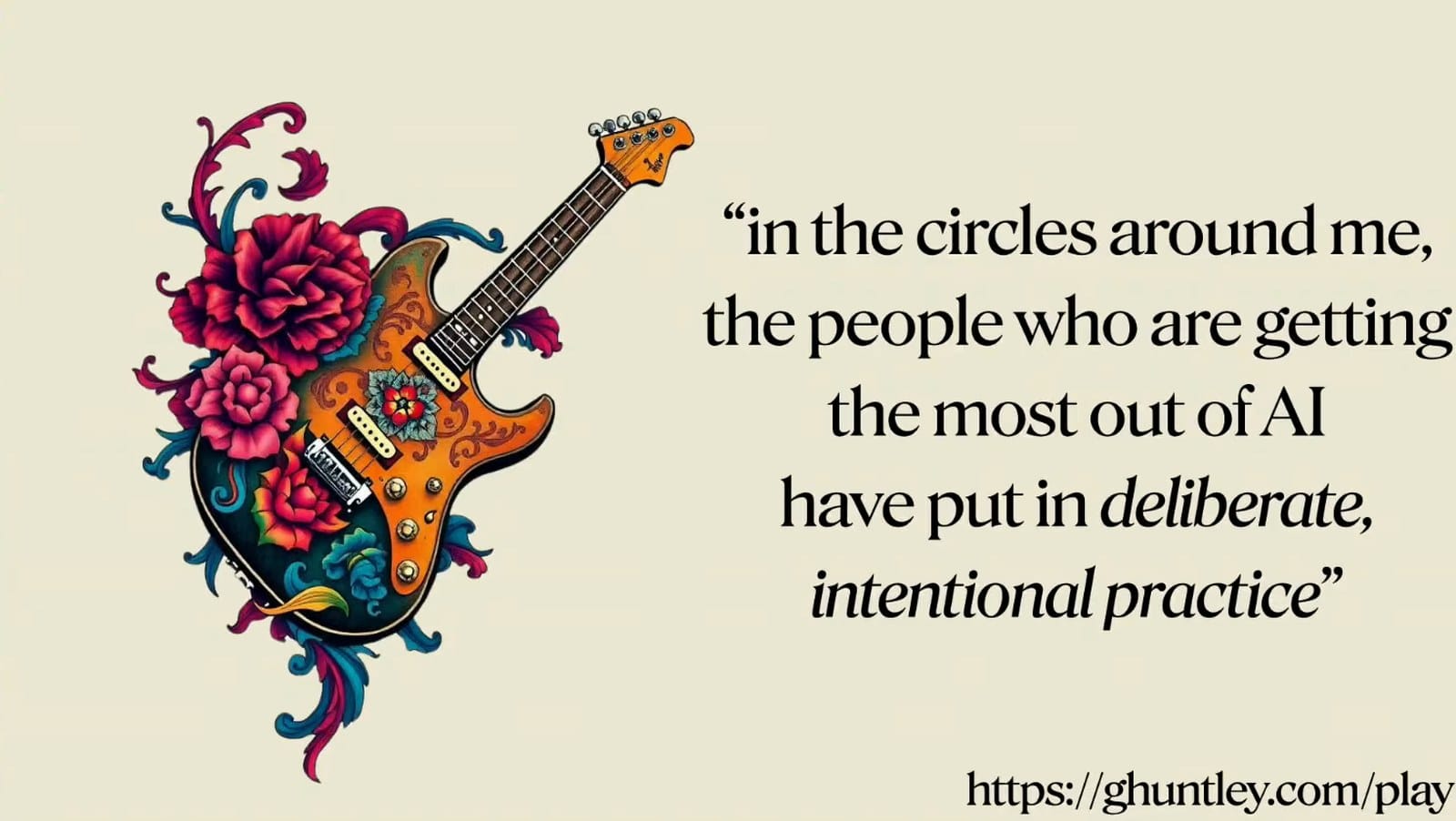
The people around me who have gotten really good at AI over the last two and a half years have been treating it not as a calculator. They've been treating it as a musical instrument.
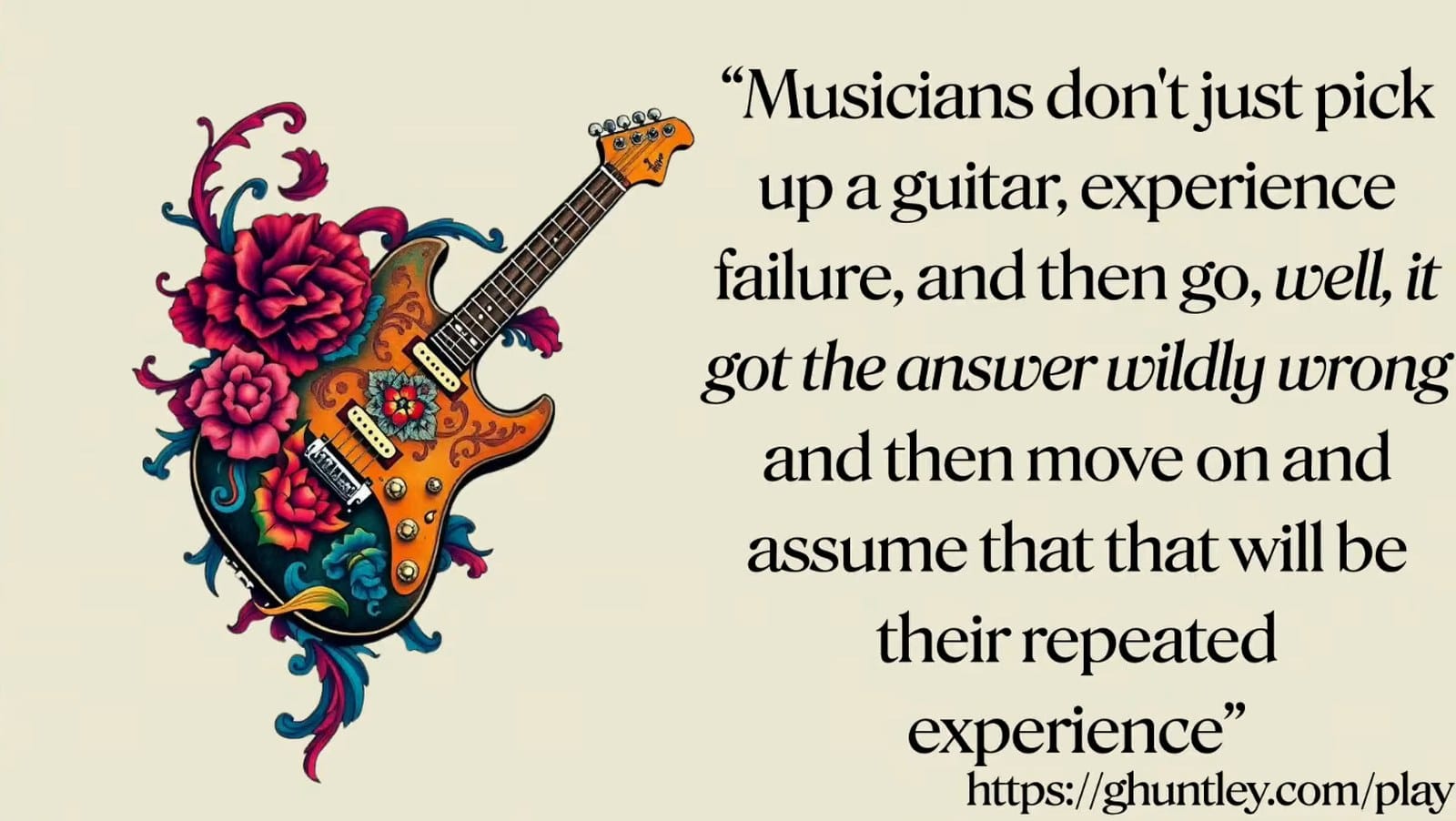
Musos don't just pick up a guitar, go "oh, it's crap," and throw it away. They recognize it's a skill issue. Skill issue, bro. So it's really important to just do things, be curious, learn, and practice deliberately and intentionally.
This has been the key for me. It's "no way this can work, it's not real, it's not real". Let's do some things. Let's do some unhinged things. Let's make some discoveries. It's through that deliberate, intentional practice that you get good.
And it's kind of weird right now, because all the corporates are pushing these guitars down onto the world and saying "please play the guitar", but not everyone's going to be musically inclined.

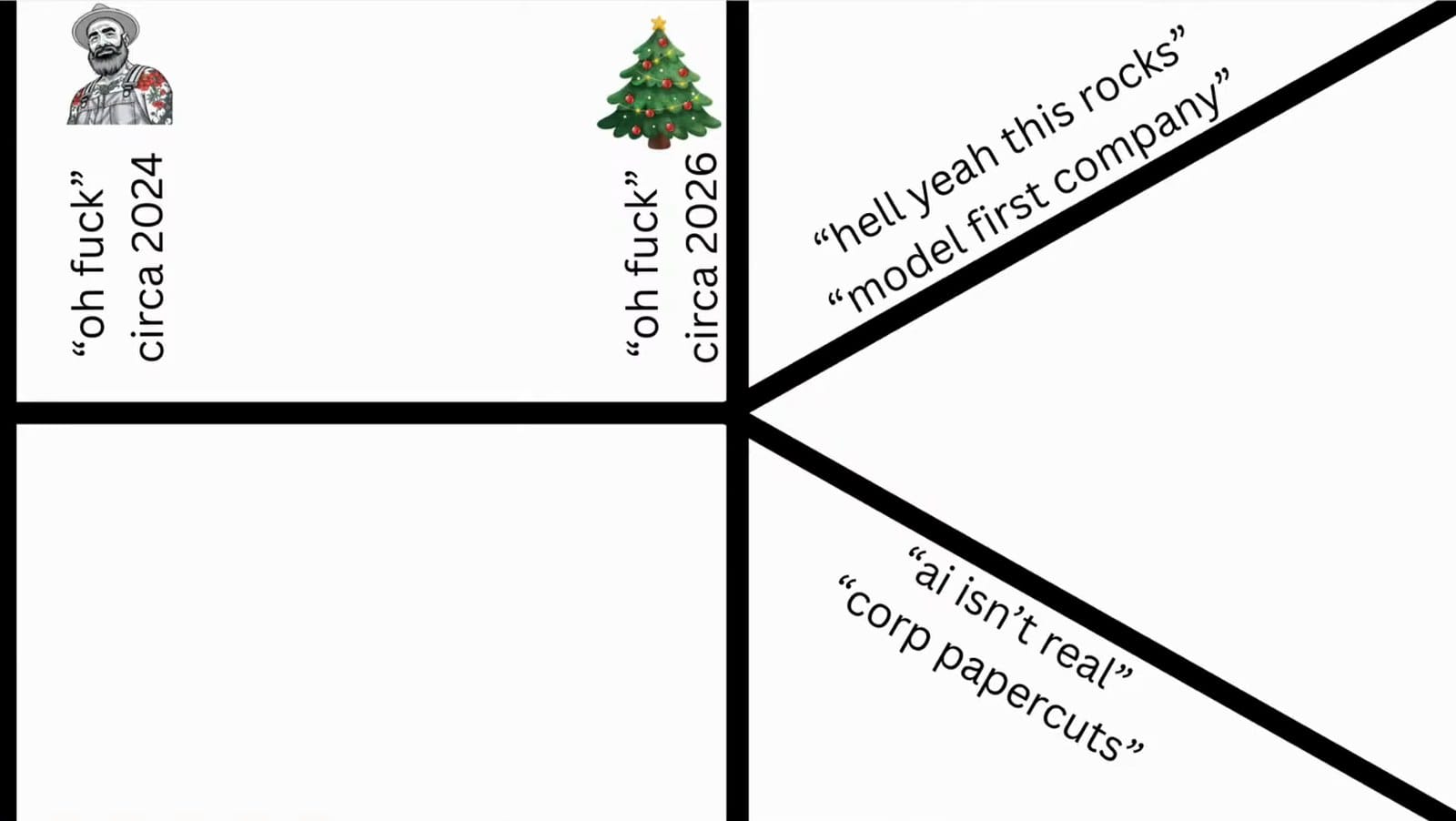
I think there are now essentially two classes of companies. You've got your brand-new startups coming out right now, going "hell yeah, I'm going to do AI-native workflows, I'm going to have the time of my life, and I'm not going to hire a lot of people." They're leaning into workflows and really changing things around. They don't think they can get good at AI by selecting a particular model. They're experimenting, they're trying things, and they're designing their codebases and processes to exploit the heck out of this new substrate.
Meanwhile, you've got every other company out there today. I've given this talk a few times now and had people say afterward, "AI is banned at my company," to which my standard response is, "Oh god, you should quit that company. Put your family unit first."
Everyone in the bottom half there is going to go through what's called a J-curve. Every people transformation has to go through a J-curve. This will take three or four years, and you can't do it too fast, or you'll break people.
Meanwhile, if you believe in Clayton Christensen's notion of disruptive innovation, the people at the top are going to be lean apex predators, going, "hell yeah, your margin is my opportunity." As the models get better, they can execute faster with less.
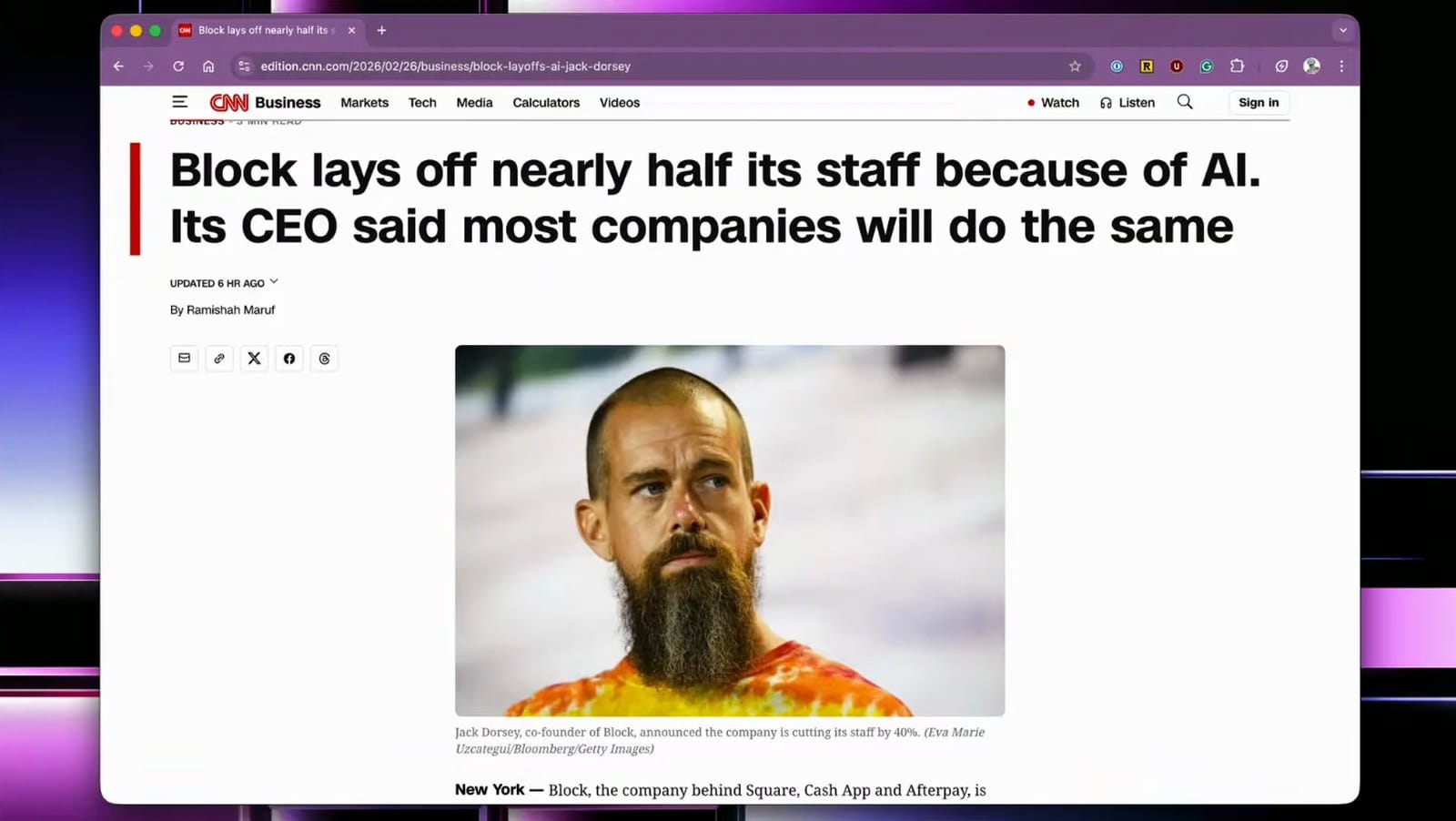
You've probably seen this: Block lays off half its staff. I want you to think about this for a little bit. I think Jack is right, but I don't think AI is priced into software stocks right now. Previously, software stocks were priced on a growth multiple. We're seeing that disappear now.
I actually think many companies will need to rethink their organizational structure. Who here has done agile and been forced to watch the Spotify agile video, with the guilds, tribes, squads, and all that stuff? It took two videos, and everyone started cargo-culting that crap everywhere.
What happens when this gets cargo culted but for AI?
It's going to take one mad lad, or a couple of different mad lads willing to experiment with the new substrate, to find the answer. We've got Tobi (Shopify) and Jack (Block) having some fun right now, experimenting to find the answer, and they will publish a case study with their findings. When that case study is done, everyone in the industry will copy it.
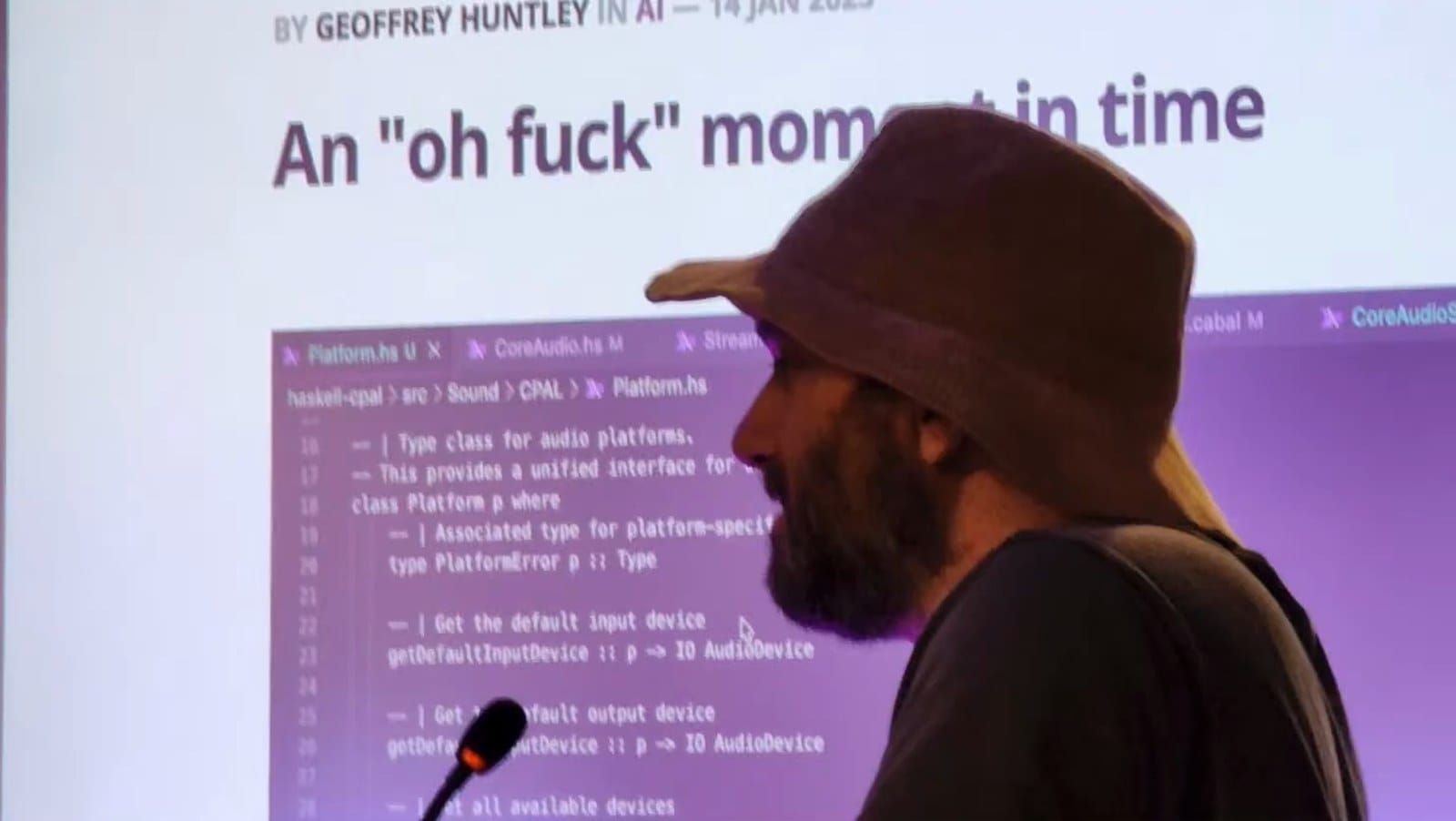
For the last couple of months, while traveling around, I've been posing the following question to venture capitalists,
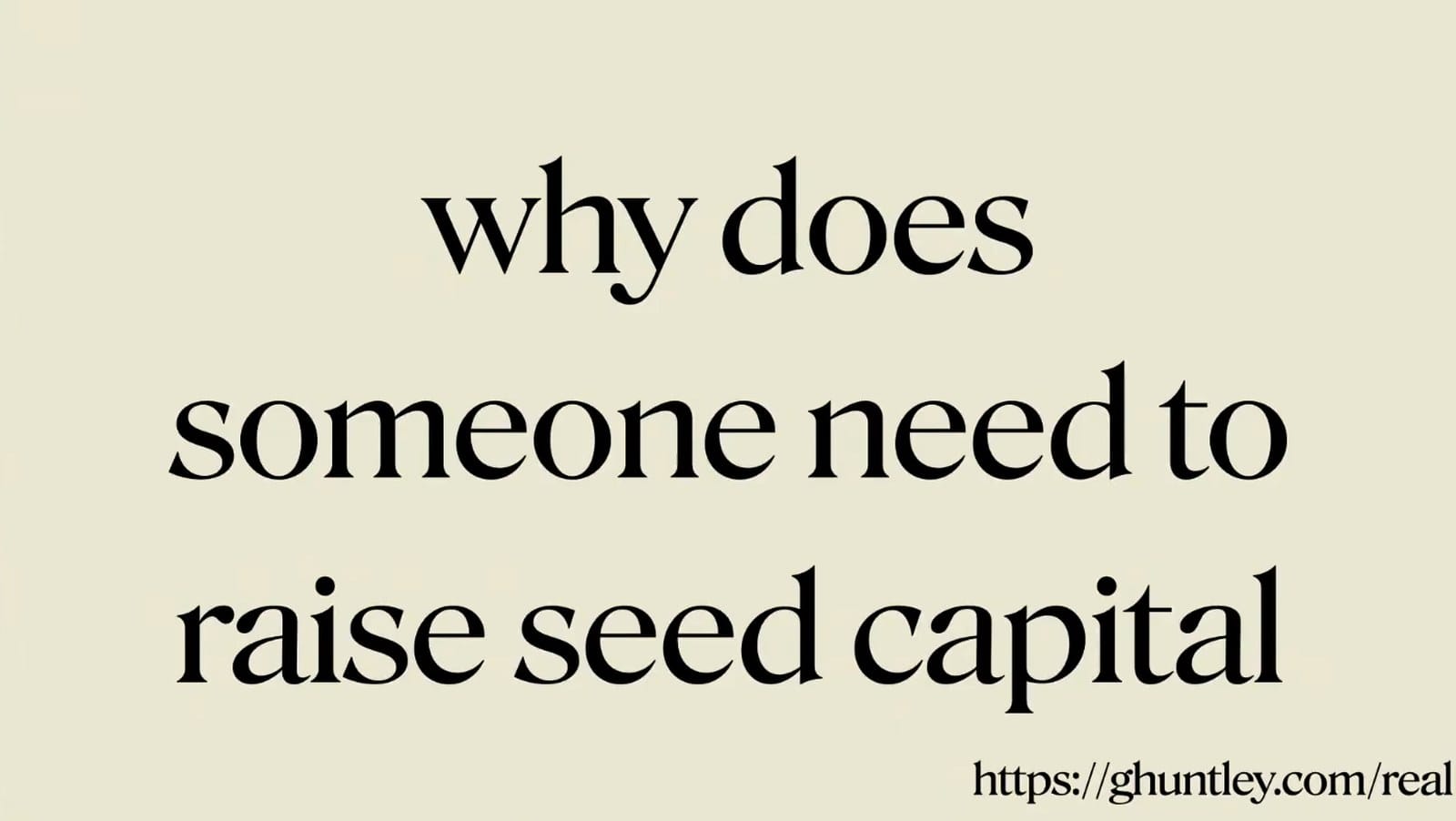
and the question that's top of everyone's mind is: why does someone need to raise seed capital now? Typically you'd raise money because you want to hire people to build the thing. Nah, bro, just build it. It's fundamentally different.
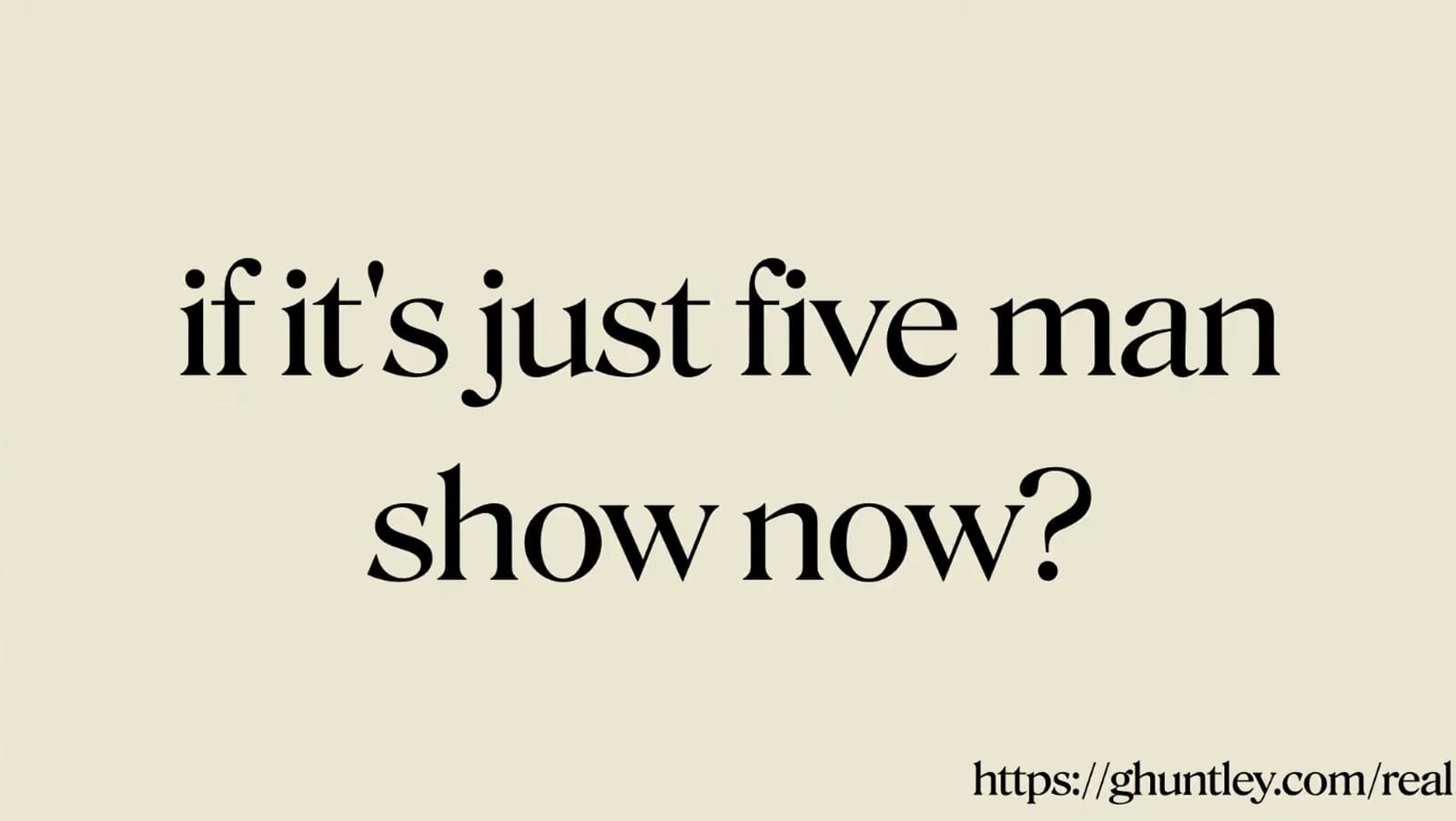
Why raise capital if it's going to be a five-man show? If someone cracks the AI operating system we've been talking about for the last couple of days, and people start experimenting, this is the year we figure out whether that's true.
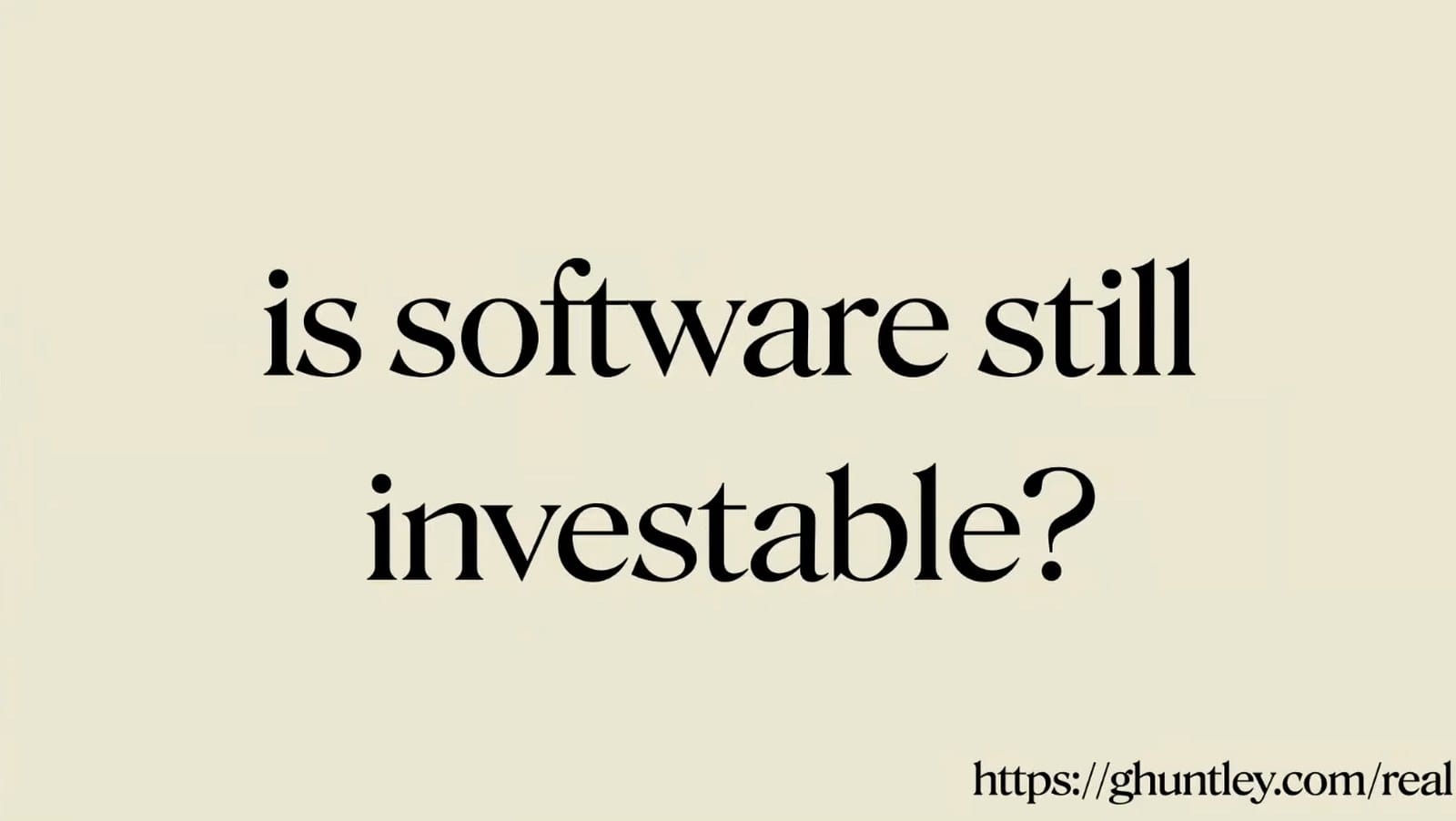
This is the question on every LP's mind, and they're putting pressure on the GPs at VC firms: Is software still investable?
So what's the point of investment? Software is still investable, but it's very different now. Instead of allocating capital to build the product, allocate it to scaling your GTM (ie., human) expansion.

So, for no particular reason, I'm going to pick one enterprise company: SAP Concur.
According to LinkedIn, 6,800 people work on expense management software. That's a lot of people. This is representative of a J-curve people transformation program: getting everyone to use AI and so on. How much time do they have compared to a lean apex predator of 50 people leveraging AI, while they've got 6,800 people and leadership is begging its employees to, "please pick up the guitar, please pick up the guitar, please get good at this stuff"?
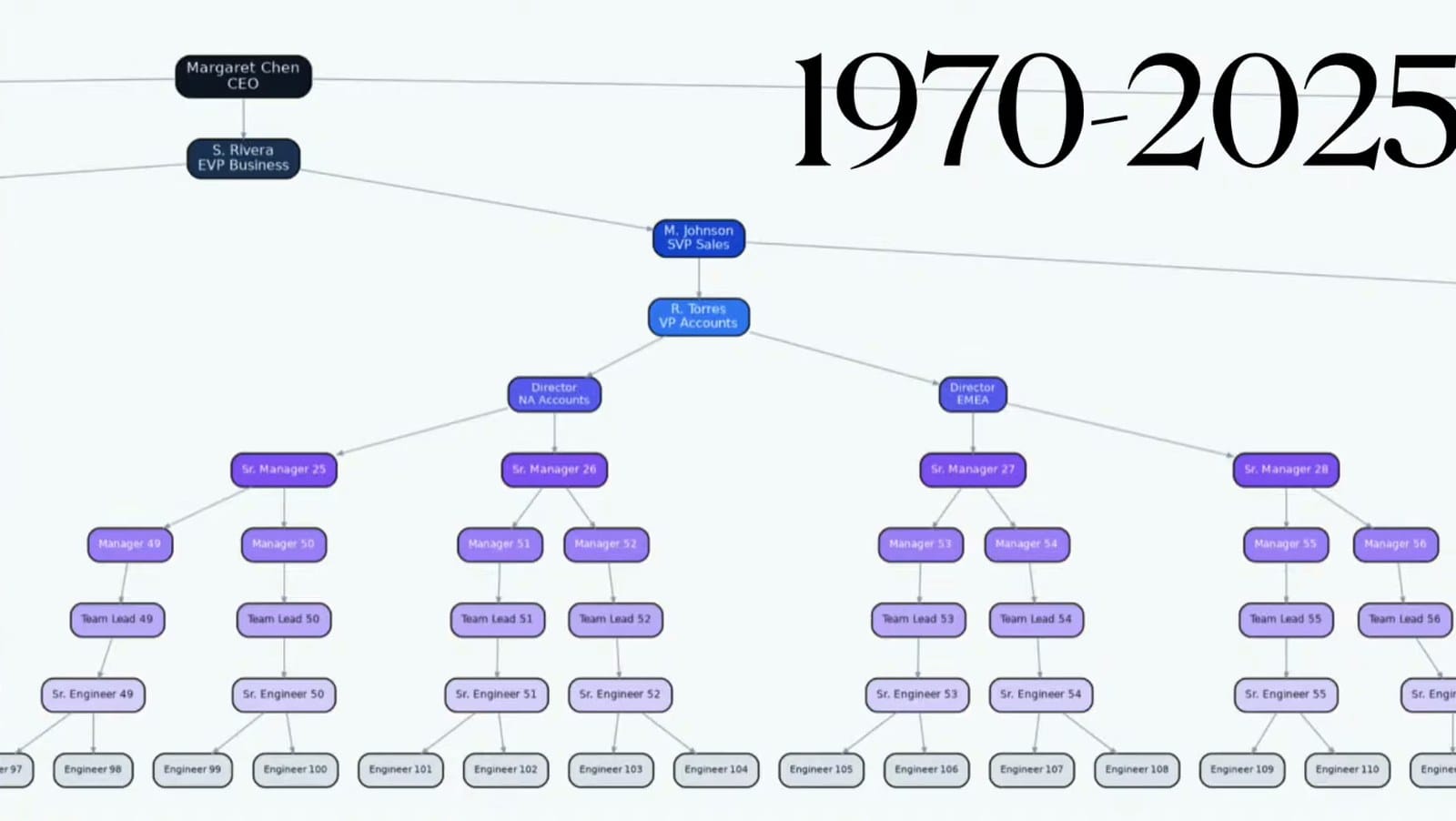
They were built with this organization chart. Every company was built with this organization chart. We basically just hired people, had meetings and committees and all these things, and the builders were few and far between.
I want you to think very carefully. How long does it take to transform those 6,800 people, and how much time do the incumbents have if this gets cracked: the idea of an AI operating system that enables these lean apex predators to get into business?
More importantly, why would you transform at all anymore? This is the quiet thing that's being discussed. If you don't believe me, go speak with leadership.
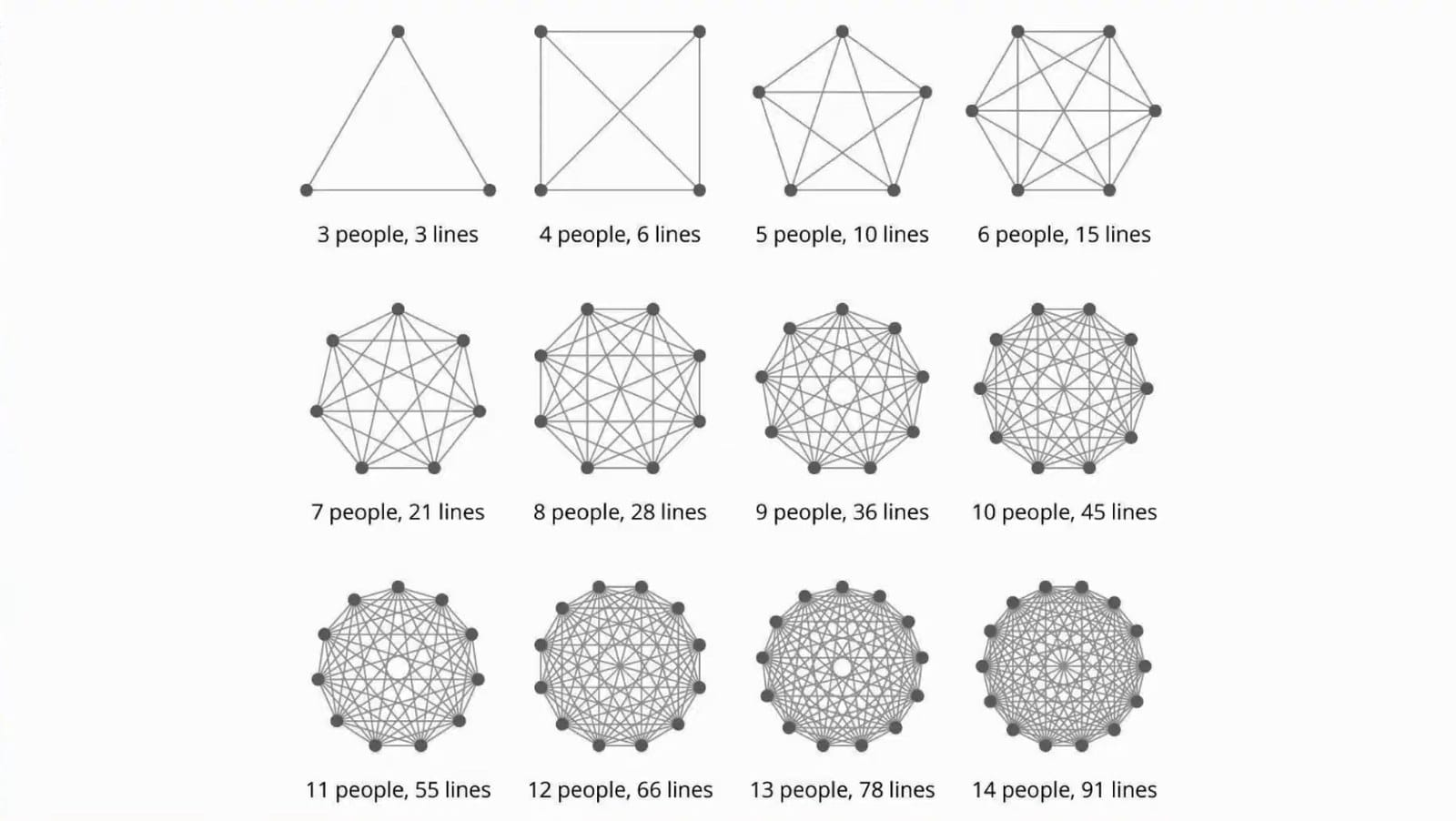
We all know smaller teams get better outcomes. Smaller teams, better outcomes, less coordination, less overhead.
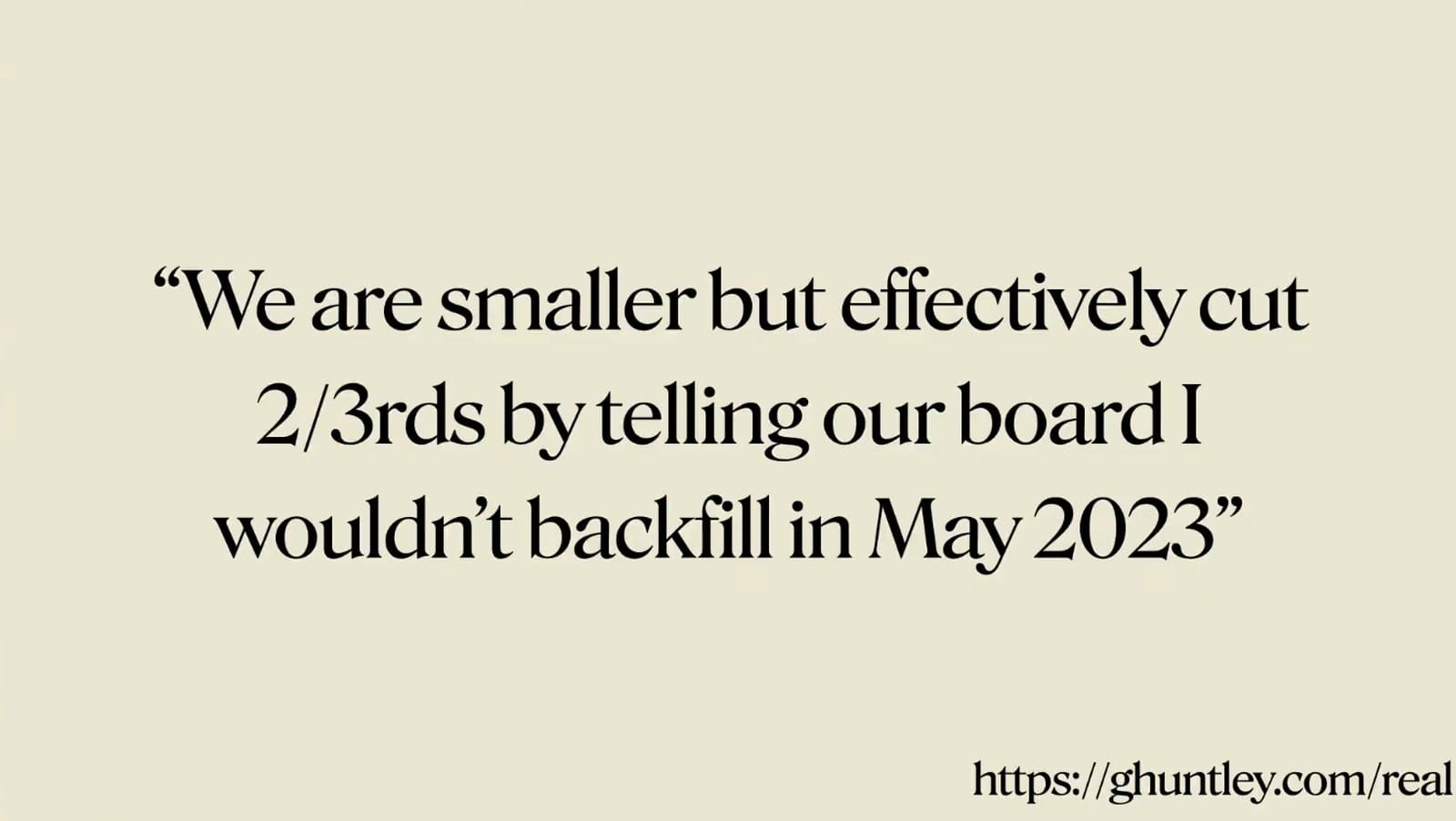
Here's a quote from a founder in New Zealand. They stopped backfilling. That's what companies around the world are doing right now. They're not necessarily doing layoffs; they've just stopped backfilling. "We are smaller but effectively cut 2/3rds by telling our board I wouldn't backfill in May 2023."
Notice the date. That's three years ago, folks. Some people have been early. If you're in leadership and thinking about these topics, I'm not advocating that you do these things, but there are people ahead of you.
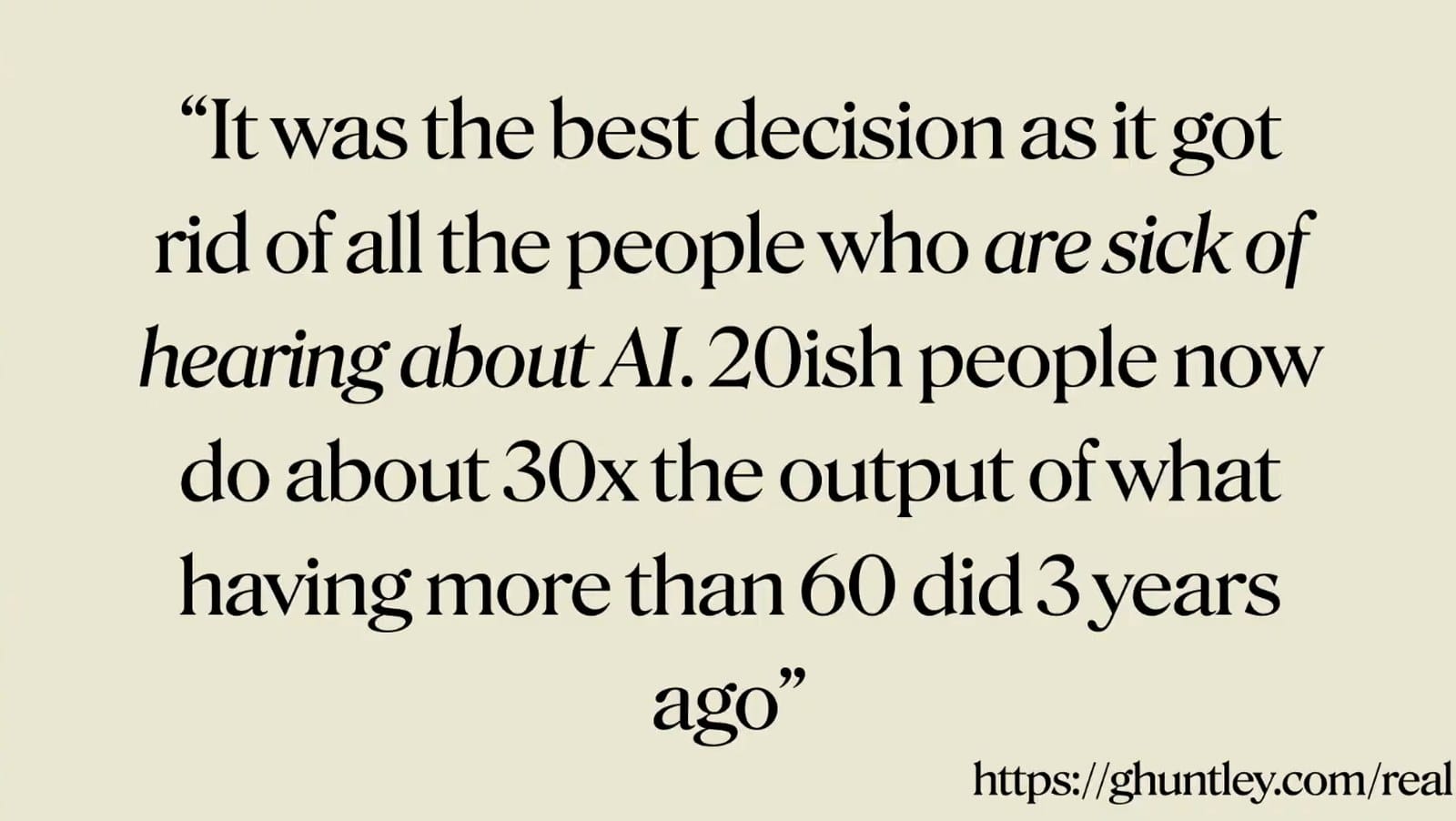
"It was the best decision, as it got rid of all the people who are sick of hearing about AI. 20ish people now do about 30x the output of what having more than 60 did 3 years ago." Sick of hearing about AI. Twenty people now, down from sixty, and getting more velocity than ever before.
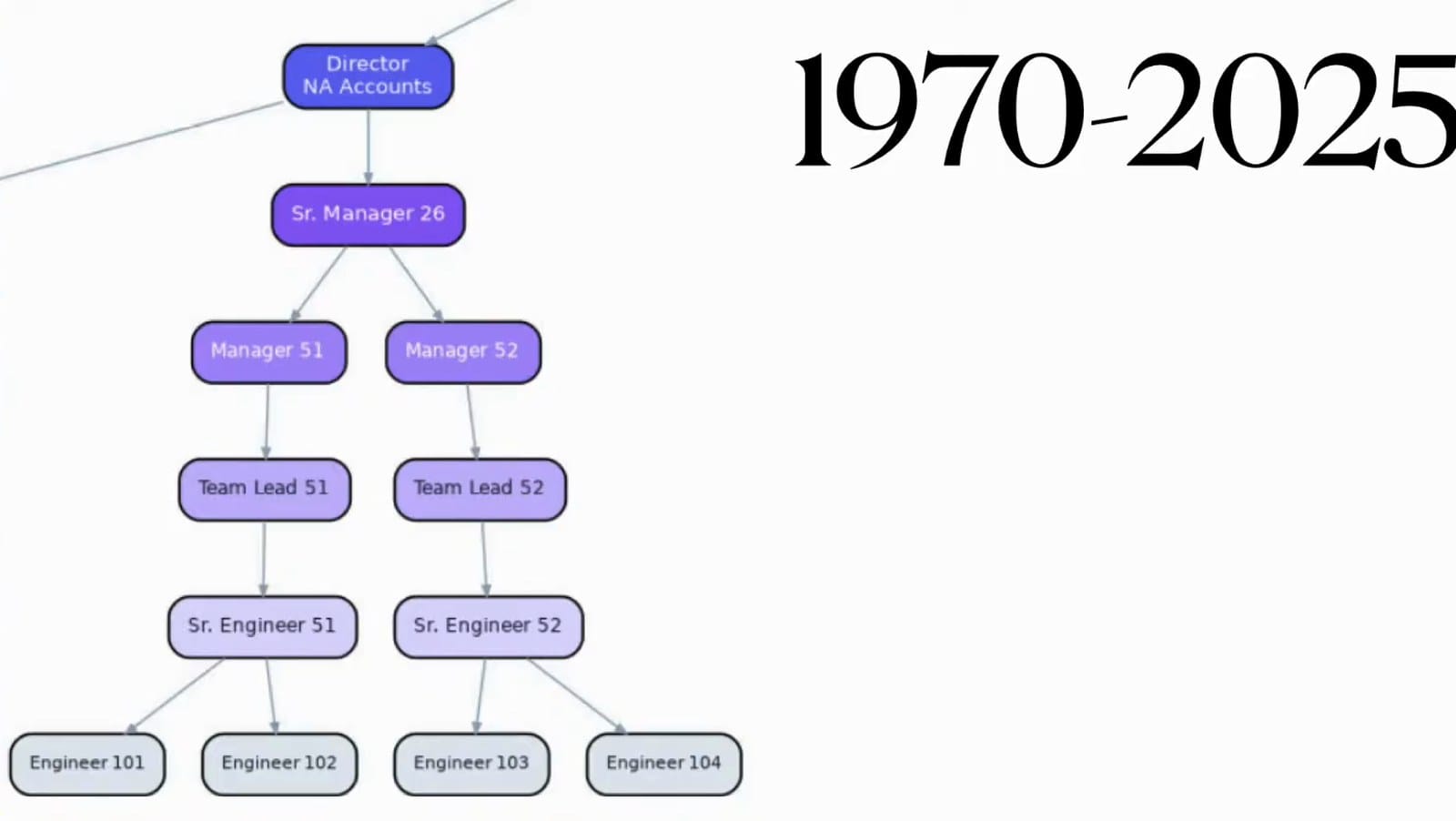
And this is going to be really hard, because AI is being pushed down onto the world by Silicon Valley. It's landing on society non-consensually. I want you to think about this. There are a lot of people here who have built their identity as leaders or managers of people. AI erases all of that.
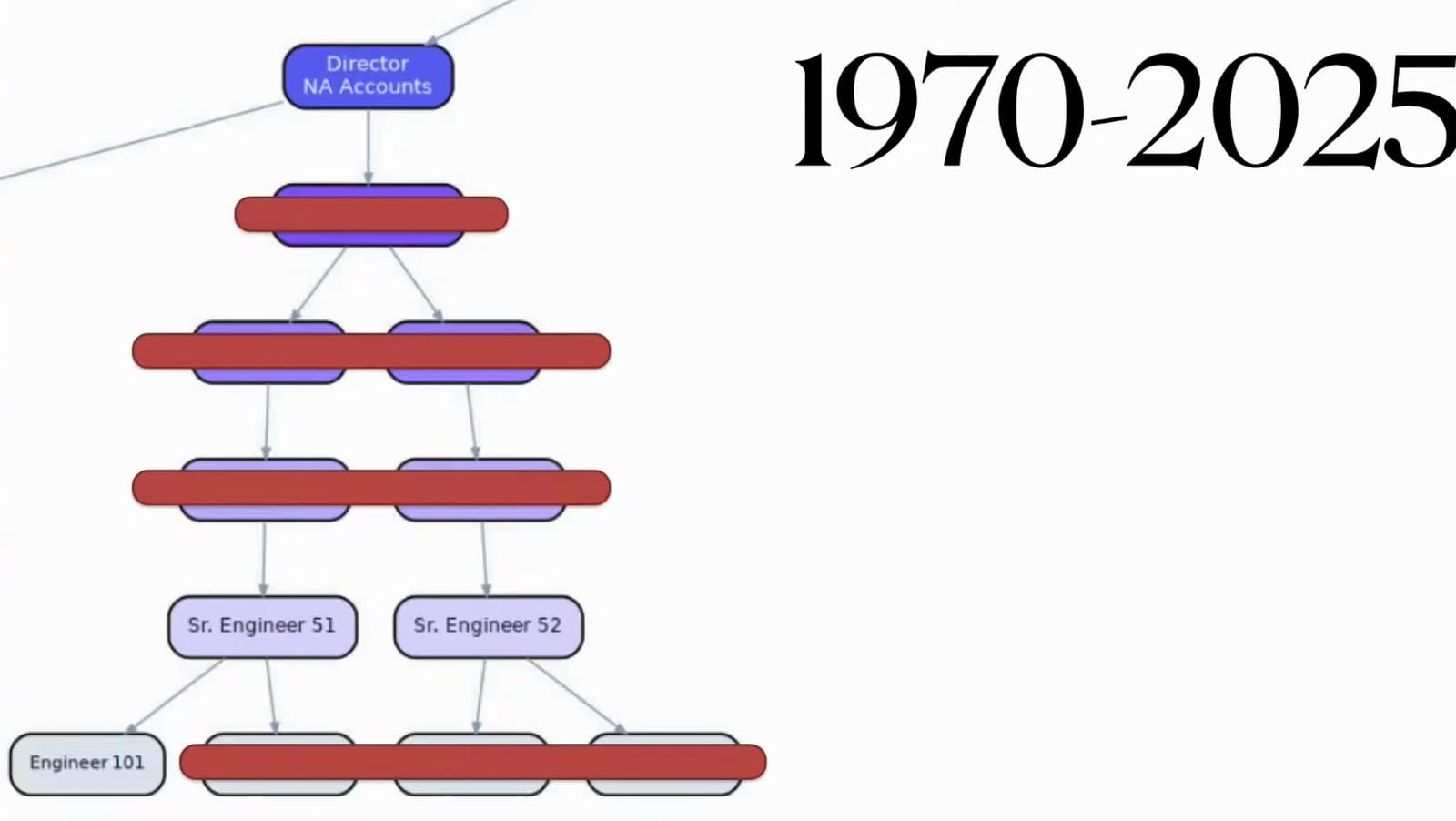
If this problem statement gets cracked, this is literally what we're looking at: people with high agency and curiosity just building things.
We don't know yet. I'm not advocating that we play 52 pickup, throw a deck of cards in the air, and restructure organizations, but this is what's on people's minds right now. This is where we are.

This concerns me deeply because software engineers trade time and skill for money.

If a company is having issues with AI, that's a company issue, not your own. If you work for a company that has banned AI, you need to leave. Honestly, right now. Put your family unit first.
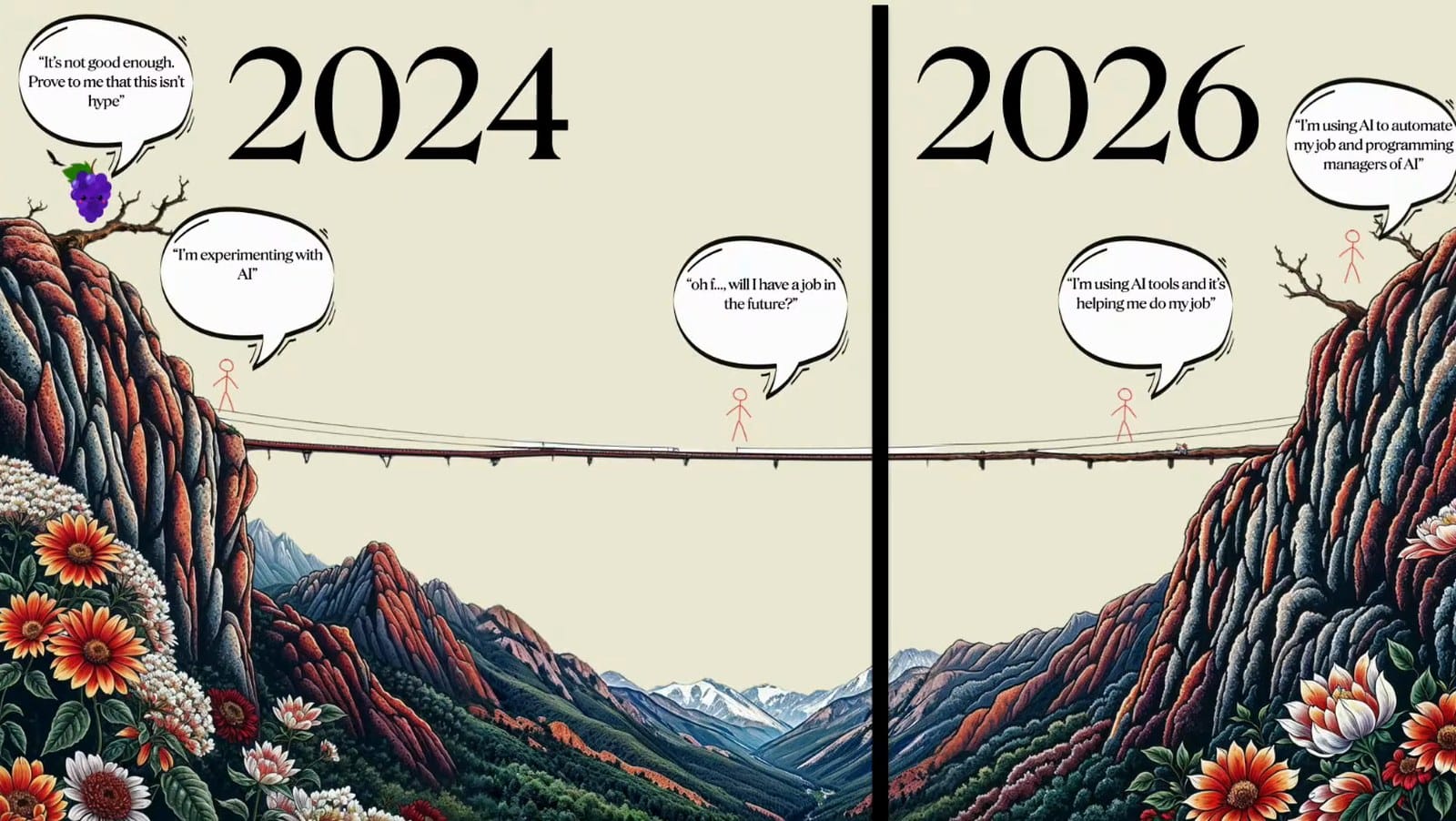
I was the purple grape back in the beginning of 2024. I was the tech lead over at Canva, and I was like, "AI is not good enough. Prove to me that it's not hype." Then I started playing with it around Christmas, and I'm like, "Everything has changed; I no longer know what is true anymore." I saw no option but to lean into it completely.
Now, in 2026, two years on, you've got two personas: those who are consuming AI in whichever way, and people who actually understand how AI works under the hood. I want you to look very carefully. There's a line there now, and I don't hire anyone left of the line anymore.
If you're figuring out who you should interview and how you're going to run your interviews, it's really simple, folks. You don't hire on the left of the line anymore. It's a curiosity test, and way too many engineers are failing it. It's so sad.

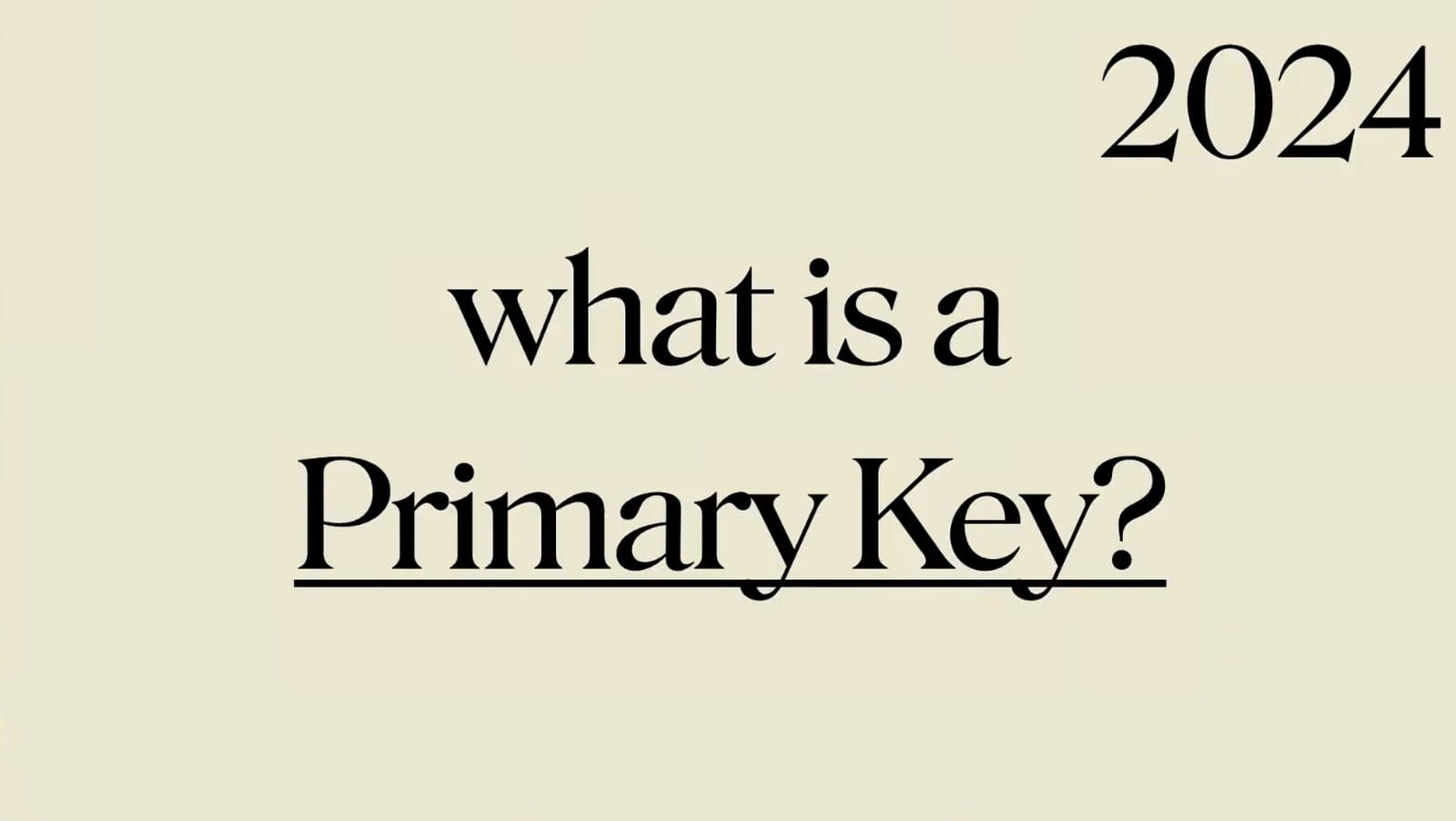
If I were to ask you what a primary key is, or to traverse a graph, you'd be like, "Come on, dude. You're shit-testing me?"
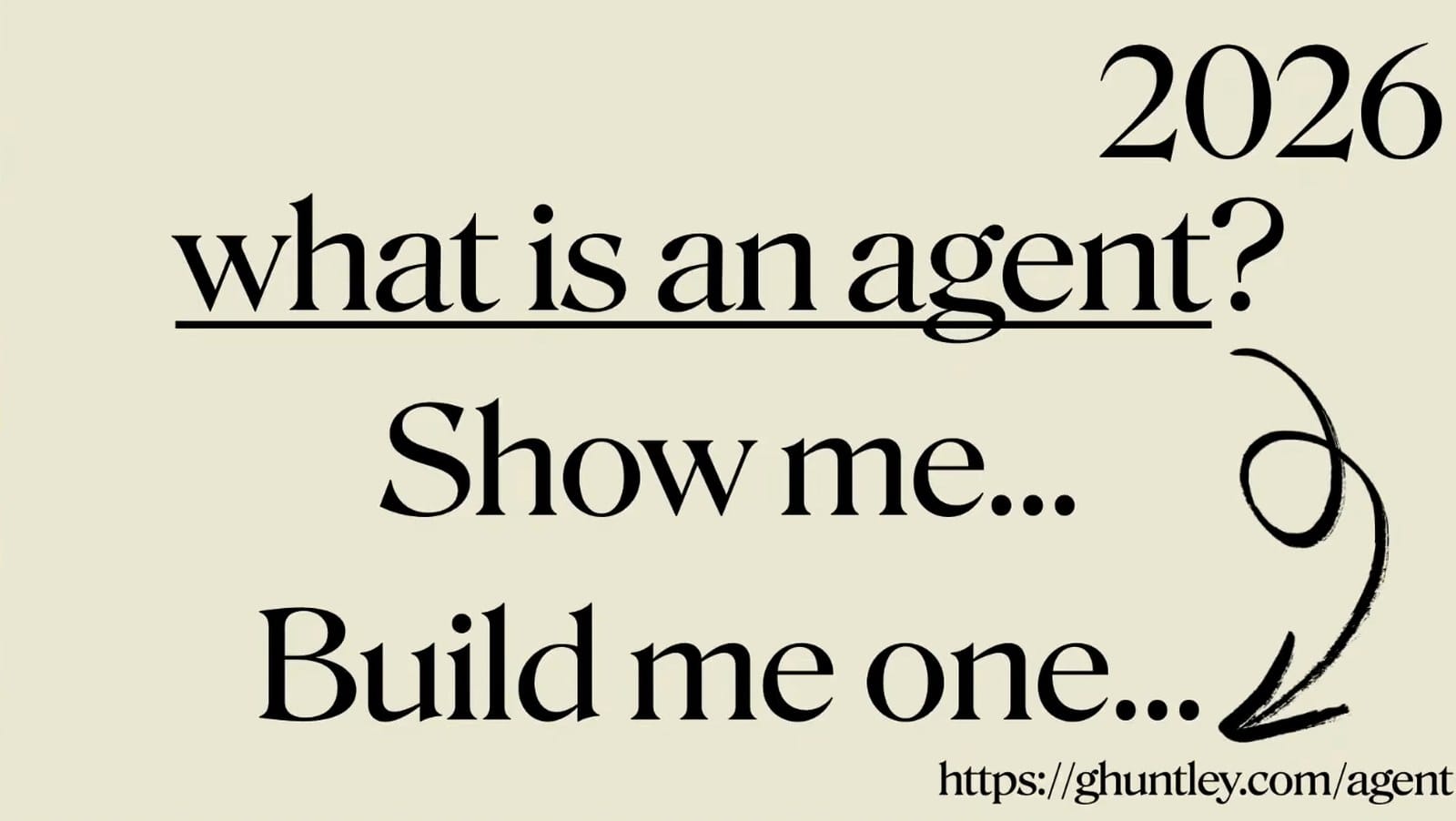
So why is it that in 2026 people can't explain what this is? I pull out a whiteboard, and they can't explain what a tool call is. They can't show me a sequence diagram of inferencing. They can't go really deep. They can't discuss the differences in the model cards across vendors. What is temperature? Why can't they answer this stuff? If you're trying to figure out who to hire, it's quite literally the people who have been curious. You should be testing for this.
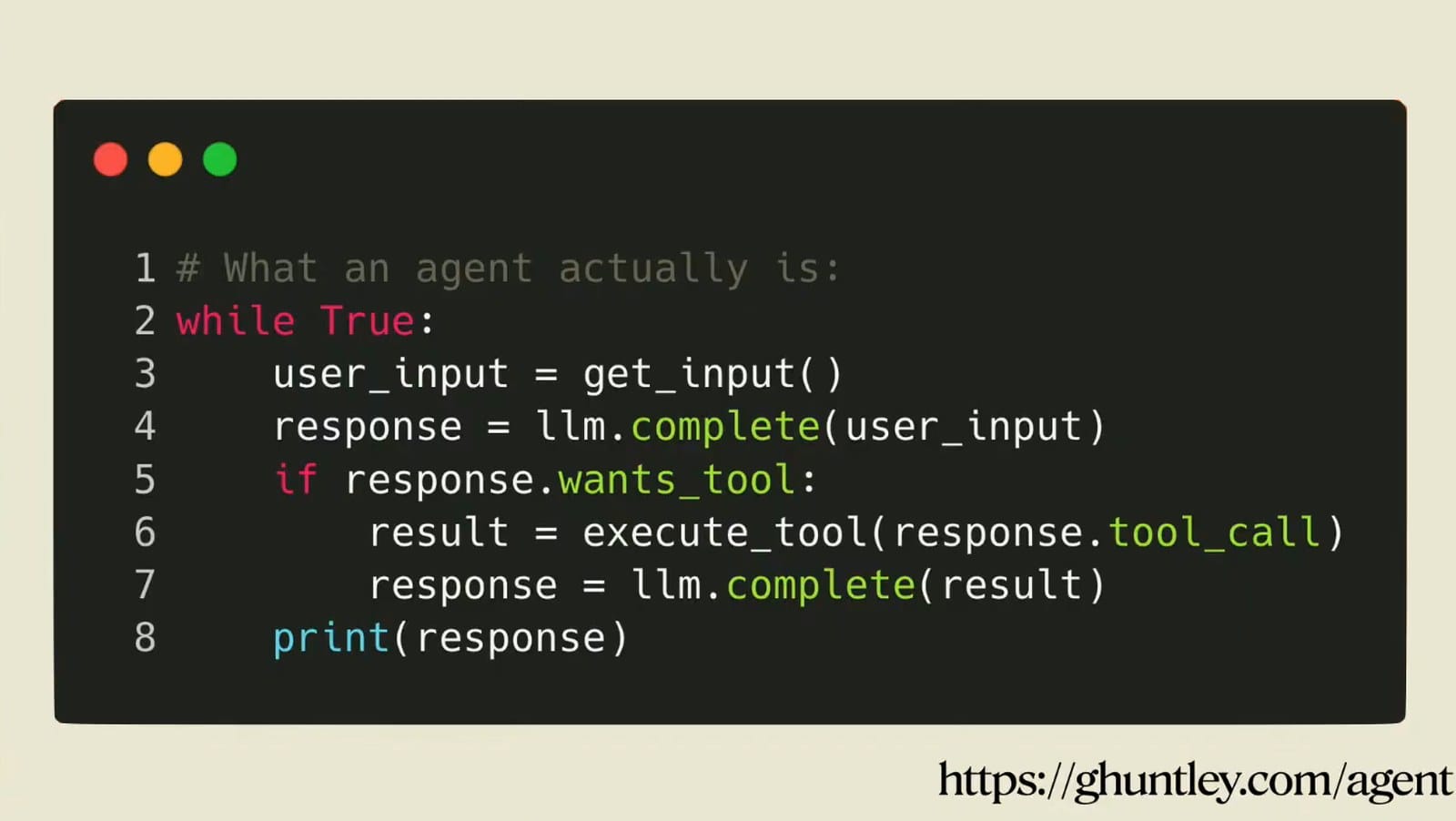
It's really sad, because LLMs and AI are literally just a while loop, and Ralph is a while loop on a while loop. Wow. Scary. The big boogeyman that's going to cause everything to fall over.


So it's going to be really interesting to see how this all plays out, folks.
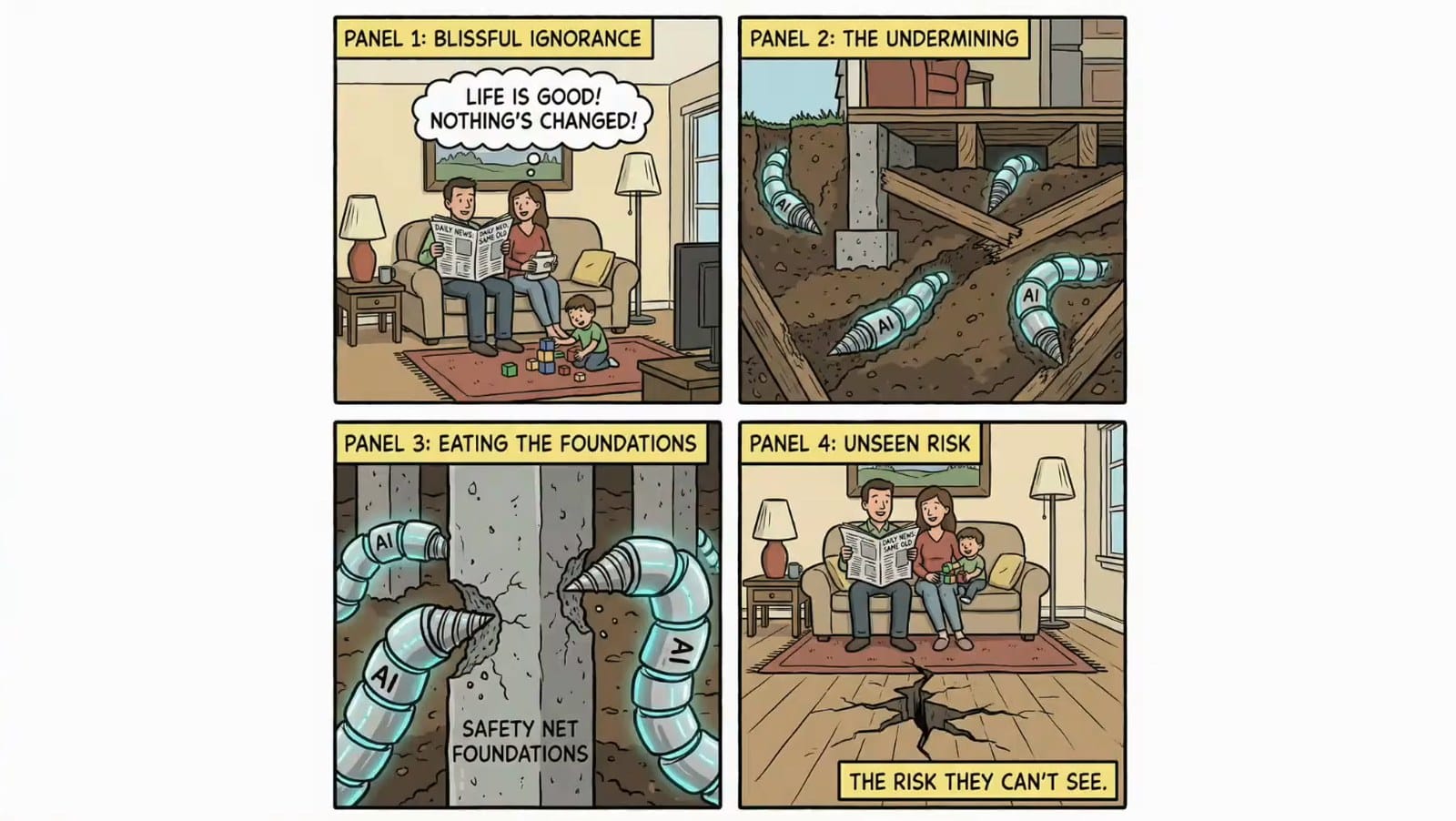
A lot of people haven't realised it yet. They're expecting AI to knock on their doorstep and announce itself, but what's really happening is that it's burrowing under society, under the houses.
Now, some closing ponderoos, really quickly, because I'm over time.
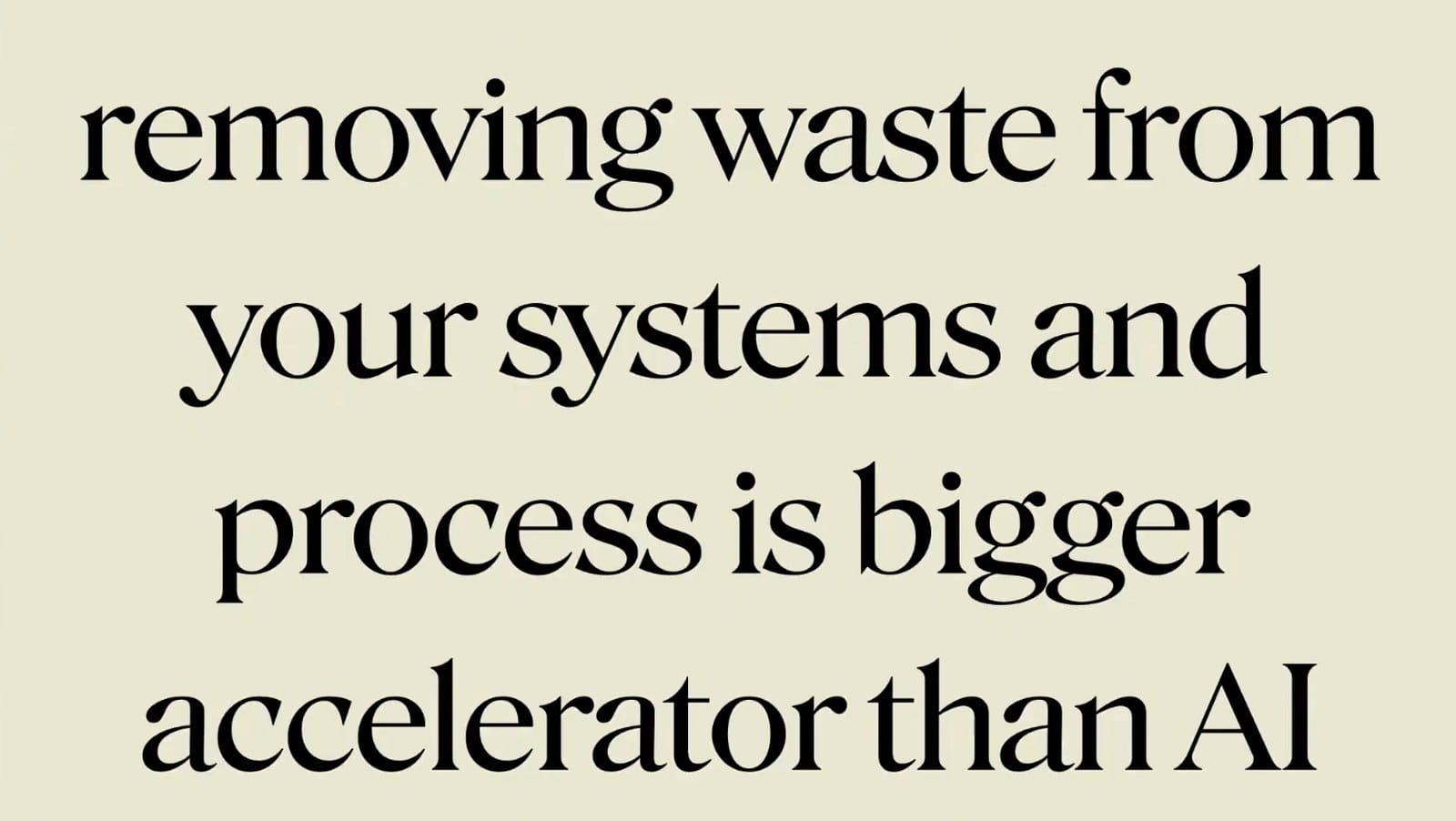
Removing waste from your organization and processes is a bigger accelerator than AI itself.
If you're trying to figure out how to hire an engineering manager, the question is simple: what have you changed in your systems and processes, now that AI has broken them? Are you still doing agile, or not doing agile anymore? How have you changed things?
That's what you look for: an engineering manager who has been thinking in this problem space. An engineer who can build an agent. An engineering manager who has changed things around in the organizational structure to achieve these things.
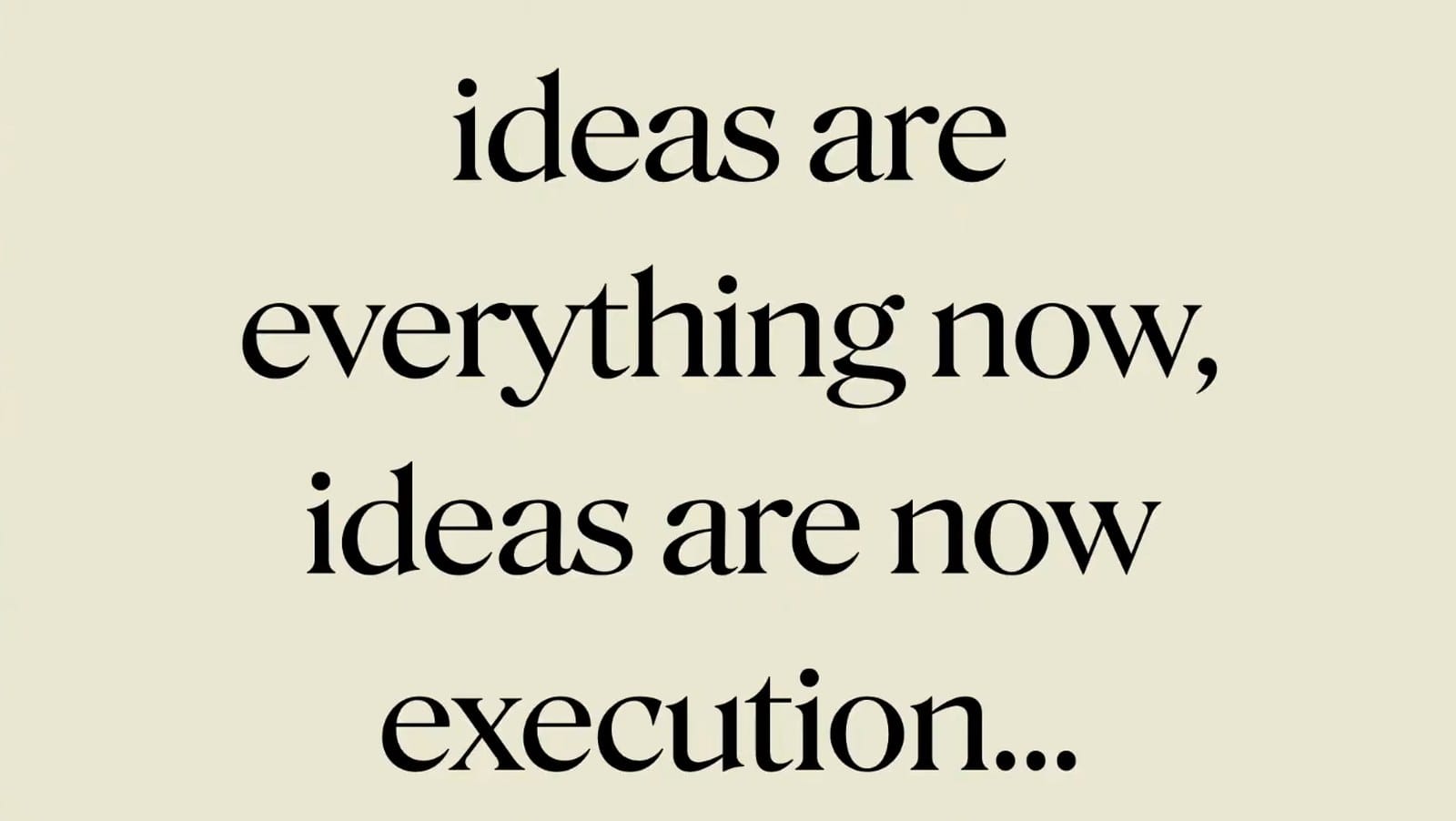
Ideas are now execution. You can literally take a screenshot of a SaaS feature, paste it into your coding agent, and get that SaaS feature. The old idea that "ideas are nothing, execution is everything" has been inverted.
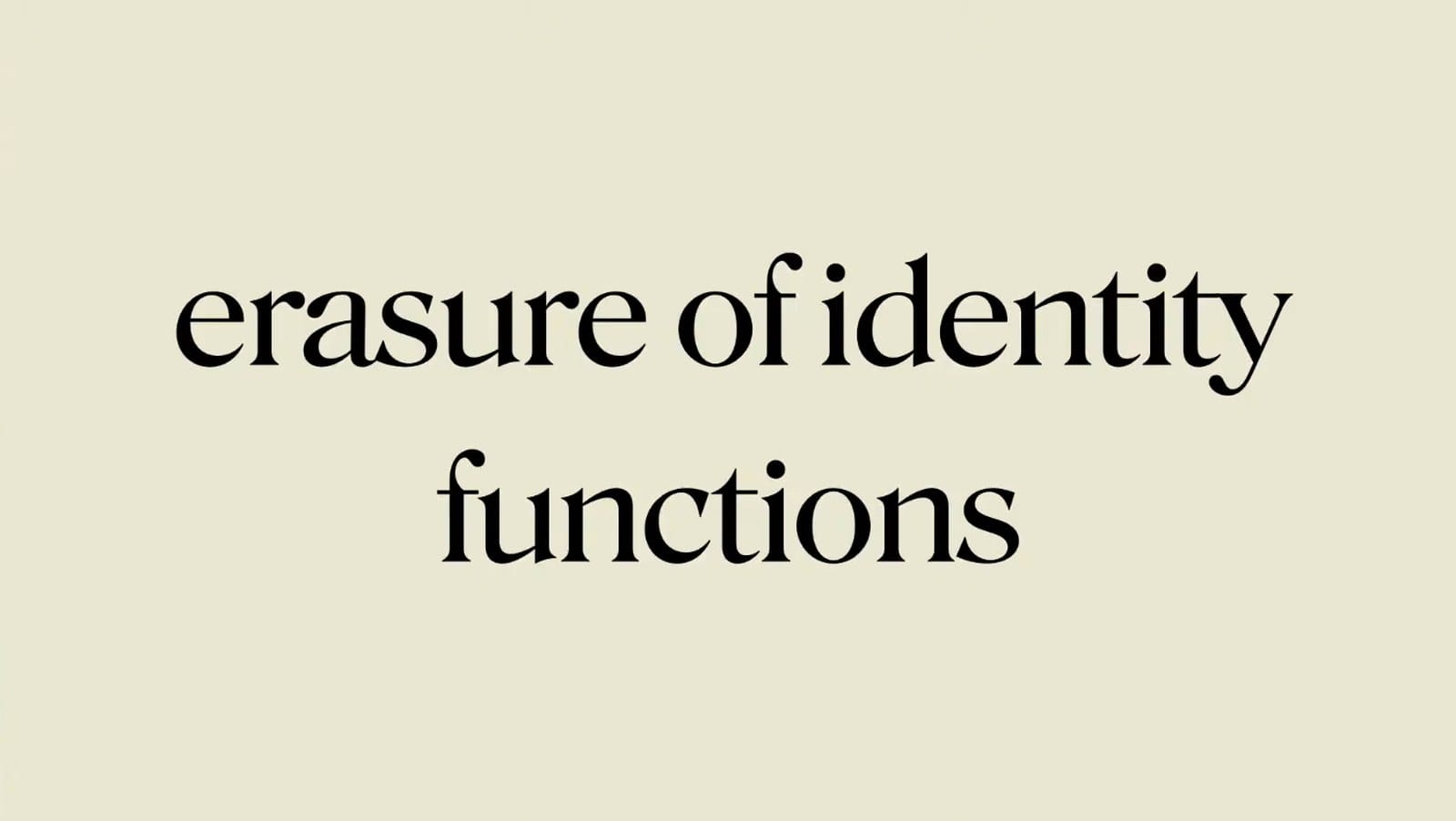
It's going to be really hard for people. AI erases people's identities, and it's psychologically disturbing.
People will need to go through the five stages of grief. The question on everyone's mind is how long we give people to get through the motions of this crisis, and what we can do to help them. Should we even help them? It's been two years, and many people are already ahead of them in personal development and are available to hire as replacements.
If you're a software engineer and you haven't built your own agent, there's a free workshop on my GitHub. It's 300 lines of code. Build your own Cursor, Copilot, or Codex and learn the fundamentals.
Don't be the person who just swaps the engine in a car. Be the curious person who rebuilds the engine and knows what a piston and a carburetor are. Get into the details. You're not a senior engineer unless you know these details.
Thank you.